
Chimney Sweep: Repair or Replace? How Lake Jeanette Homeowners Decide
The most expensive chimney decision a Lake Jeanette homeowner can make is a full liner replacement that wasn’t necessary. The second most expensive is a patch repair on a system that needed replacement. Both happen more than they should, and both usually trace back to the same gap: nobody looked at the chimney’s actual failure mode before quoting a fix. Here’s the framework we use on the Lake Jeanette side of the ridge.
Short version: repair or replace depends on which component has failed, how long water has been getting in, and whether the material on the table can hold. Cost follows from those three answers. It doesn’t lead them. If you’d rather have someone walk the system than sort through it alone, call (877) 492-3599.
Why Repair-or-Replace Decisions Go Wrong in Chimney Work
A chimney isn’t one object. It’s three systems stacked in a single column – flue liner, crown, and masonry envelope – plus a cap on top, and each one ages and fails on its own timeline. A crown that cracks in season two doesn’t mean the liner is compromised. A liner that spalls in season eight doesn’t automatically mean the masonry needs rebuilding. When a contractor treats the chimney as a single unit, the swing is always extreme: cheap patch on a bad liner, or full replacement on a crown that needed a two-day repair.
At the other extreme, a sweep-only outfit can diagnose the flue but has no repair capacity past brushing and a tube of silicone. You get “you need a full reline” because it’s the only remedy they can perform. Neither read is honest. Lake Jeanette chimneys sit at the top of the watershed, and the freeze-thaw pattern alone accounts for most of the calls we get.
The framework a specialist uses:
- Which component is actually failing (liner, crown, or masonry)?
- How many seasons has water been getting in?
- What material is on the table, and can it bond to what’s there?
Answer all three before you talk about price.
The Three Components – and Why Each Has Its Own Repair-or-Replace Logic
Here’s where most of the confusion starts. Each component has a threshold below which repair is correct and above which replacement is the only sensible call. Conflating them is how homeowners end up paying for the wrong work.
1. The flue liner
Clay tile liners crack and spall. If the damage is localized – a single cracked tile visible on camera, no offset, no gap exposing the masonry behind – spot repair or a cast-in-place restoration is often correct. If tiles are spalling across multiple sections, joints are offset, or the masonry has been exposed for more than one heating season, replacement is not a cost decision anymore. It’s the only way to keep smoke, creosote, and carbon monoxide inside the flue.
2. The crown
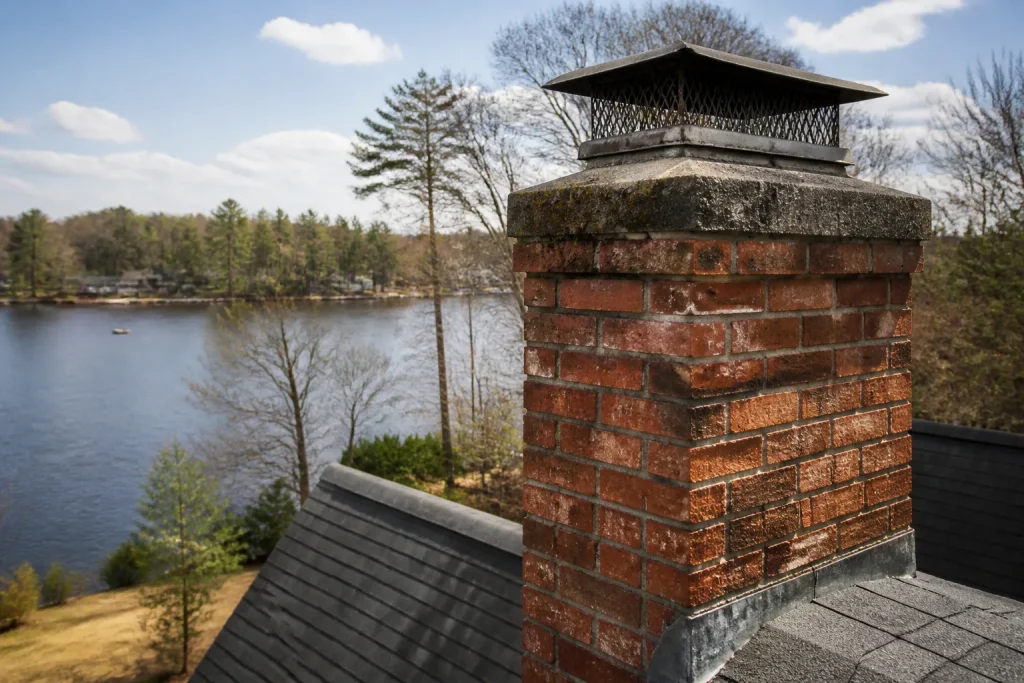
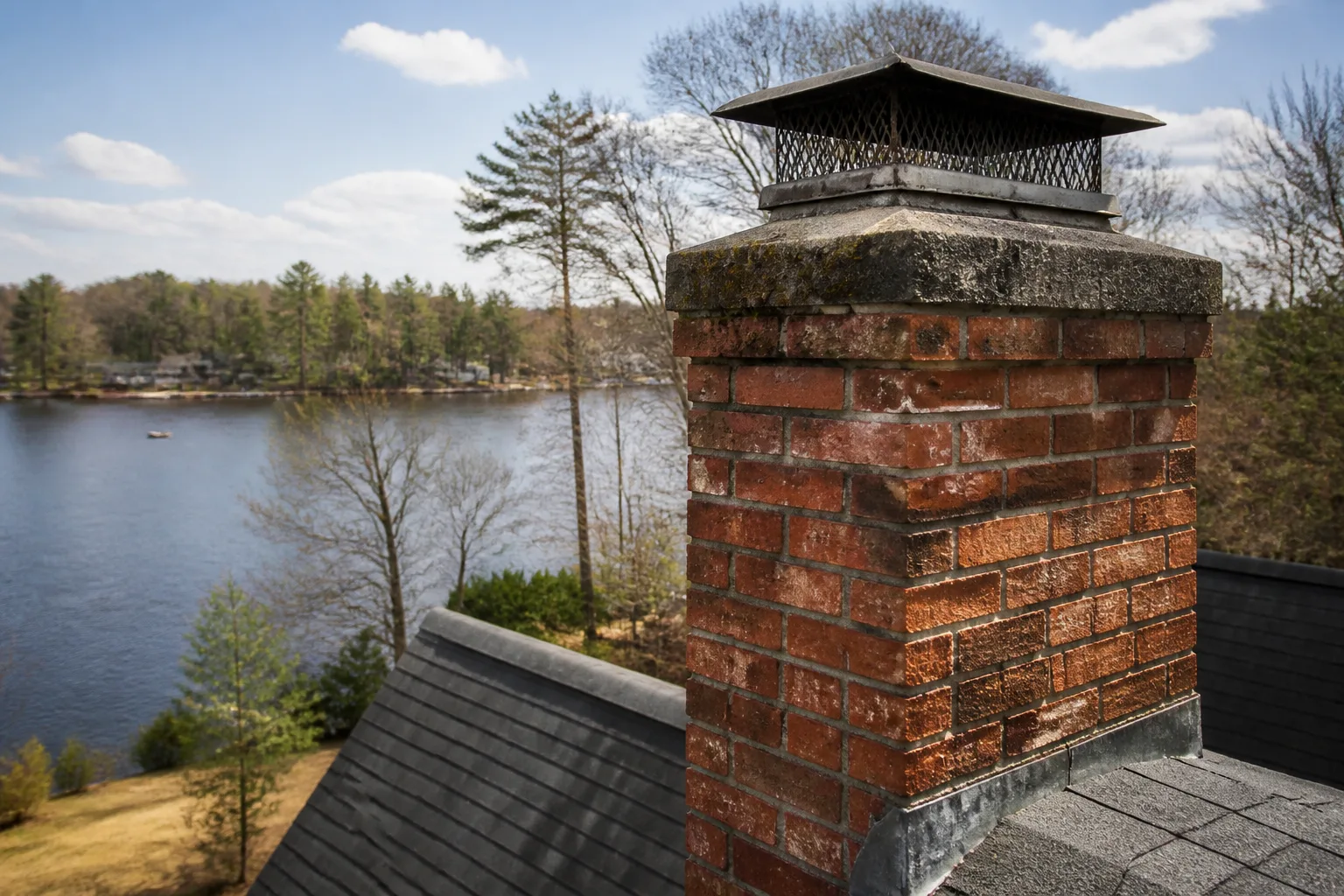
The crown is the concrete slab at the top that sheds water off the chimney face. When it cracks, water walks down the masonry every rain. A crown can usually be rebuilt or repaired in place – and this is one of the two places we look first in any Lake Jeanette chimney inspection. Capping and crown work belong together for exactly this reason.
3. The masonry structure
Mortar joints in the exterior wythe are the third player. Some repointing below the roofline, and the chimney stands for decades more. Severe spalling across courses, a chimney that leans, or deteriorated interior brick behind a failed liner is a rebuild conversation, not a repointing one.
The Middle Path Most Chimney Companies Miss: Cast-in-Place Liner Restoration
Between “the liner is fine” and “you need a full reline” there is a narrow, legitimate middle: cast-in-place liner restoration. The process resets a damaged clay flue to a smooth, sealed interior surface using a cementitious material applied to the existing tile, without pulling the liner out of the chase. When the tiles are still in place but cracked or pitted, and the surrounding masonry is sound, this is genuinely the correct fix. It costs less than replacement, it keeps the existing chase intact, and it restores a fluable, code-compliant flue.
The catch: not all restoration materials are equal, and only one is specified by most chimney restoration specialists – HeatShield. We use it because it’s the product masonry contractors reach for when a flue needs a certified resurfacing rather than a cosmetic skim, and because it’s what holds up across the temperature swings a Lake Jeanette winter throws at a chimney. Hardware-store cement mixes don’t bond to a hot, acidic, wet flue. Contractor-grade does.
Cast-in-place restoration is not a compromise on a bad liner. It’s a specific remedy for a specific failure mode – and it’s the option a full-replacement-only contractor has no incentive to offer.
When Full Replacement Is Non-Negotiable – Regardless of Cost
Some chimneys can’t be repaired. On these three failure modes, full relining or structural replacement is the answer, and any quote offering a lower repair path is selling you a patch that won’t survive a season.
- Spalling liner tiles across multiple flue sections. Once the tile face is gone, no resurfacing material has a sound substrate to bond to. The flue has to be relined with a new system – for many Lake Jeanette homes, DuraFlex, because the flexible steel liner can navigate offsets and re-enter the flue without cutting the chase.
- Offset joints in the tile stack. If the tiles have shifted, the flue is no longer continuous, and hot gases can escape into the chase. Resurfacing can’t realign the flue. A new liner can.
- Crown failure that has allowed water into the chase for multiple seasons. This is where Lake Jeanette’s freeze-thaw cycling does its worst work. Once water has saturated the masonry behind the liner, the chimney is as much a water problem as a firebox problem. You can’t repair that from the inside.
If a technician recommends replacement on any of these and can’t show you why on camera, ask for the footage. There isn’t a good reason to refuse.
The Lake Jeanette Factor: Freeze-Thaw and the Repair-or-Replace Math
Lake Jeanette homes sit in a frost-pattern band that’s more aggressive than most inland NC properties. The lake moderates summer heat and holds cold air through the shoulder seasons, and the result is a chimney envelope that cycles through freeze and thaw more often each winter than a chimney fifteen miles inland. Each cycle, water that’s worked into a mortar joint expands and pushes the surrounding mortar or brick outward by a hair. Over a few winters, those hairlines become cracks, and cracks become pathways for water into the chase.
What that changes for you:
- The crown is the highest-value line of defense in a Lake Jeanette chimney, which is why we look at chimney cap & crown condition before anything else during an inspection.
- Repointing that might be routine inland is often urgent in a lakefront neighborhood – water goes in fast and stays in longer.
- A repair that would hold for a decade on an inland home may need closer monitoring here, and that’s worth knowing before you choose the cheaper option.
None of this tips the decision toward replacement automatically. It does mean the homeowner’s timeline matters more than the price sheet.
How to Evaluate a Replacement Recommendation – the Questions That Separate Expertise From Sales
You don’t need to know what a spalling tile looks like. You need to know when a technician is choosing a repair material that can’t bond. Two questions answer that:
- “Show me the failure on camera.” Every inspection should include a camera look at the flue interior, and the footage should be shown to you, not just described. If a recommendation for replacement can’t be backed by video, it’s not a diagnosis.
- “Explain specifically why the repair material won’t hold here.” A professional can name the substrate problem – no sound tile left, offset joint, saturated masonry behind the liner. A salesperson says “it won’t last” and moves on.
Also worth asking: “What happens if we wait one season?” If there’s a safe answer, the technician should give it. If there’s not, the reason should be specific.
When to call a pro
Any visible crack in the crown, any smoke coming back into the room, any musty smell from the firebox in summer, or any chimney you haven’t had inspected since buying a Lake Jeanette home – call. A chimney sweep with camera inspection is not the same as a quick brushing, and it’s the difference between knowing your chimney is clean and knowing it’s safe.
Key Takeaways
- Repair or replace isn’t a cost question first – it’s a question of which component failed and whether the repair material can bond to what’s there.
- Cast-in-place liner restoration is a legitimate middle path on cracked-but-still-in-place tile. Not every chimney company stocks or understands it.
- Spalling tiles, offset joints, and multi-season crown failure are the three conditions that make replacement the only honest answer.
- Lake Jeanette’s freeze-thaw cycling accelerates mortar joint failure and makes crown condition a bigger deal than in inland homes.
- Ask for camera footage. Any technician who can’t show you the failure isn’t diagnosing – they’re quoting.
The Bottom Line
Most Lake Jeanette homeowners who call us worried about a big repair bill walk away with a smaller scope than they expected, or a bigger one – but a scope they can actually verify on camera. That’s the standard we hold to: show the failure, name the material, and say plainly when a repair can safely wait.
From the firebox to the crown, we handle the whole system – inspection, sweeping, cap and crown work, fireplace repair, and structural chimney repair – using contractor-grade materials from HeatShield, DuraFlex, Gelco, Olympia Chimney, Famco, and Copperfield rather than hardware-store substitutes. Our technicians have up to 10 years of experience, and they work with the same products masonry contractors and chimney restoration specialists rely on, not big-box alternatives.
If you’re in Lake Jeanette and need help, Chimney Sweep Lake Jeanette offers free estimates. Call (877) 492-3599. We answer 24/7. Fast dispatch from 7am to 7pm, Sunday through Friday, closed Saturday.
Frequently Asked Questions
The answer comes down to failure mode, not cost. If the flue tile is cracked but still sound and the masonry behind is dry, restoration is usually correct. If tiles are spalling across sections, joints are offset, or the crown has let water in for multiple seasons, replacement is the only honest path. A camera inspection in Lake Jeanette answers the question definitively. Call (877) 492-3599 to book one – estimates are free.
Cast-in-place liner restoration is a legitimate middle repair between a spot patch and full relining. A cementitious material is applied to the inside of the existing clay flue to seal cracks and restore a smooth, continuous surface, without pulling the liner out of the chase. It’s correct when the tiles are in place but cracked or pitted. It’s not correct when the tiles are spalling or offset – no material bonds to a failing substrate. When it’s the right repair, we use HeatShield, the product chimney restoration specialists specify. Call (877) 492-3599 for a specific evaluation on your Lake Jeanette chimney.
Lake Jeanette sits in a frost band where the lake moderates summer heat and holds cold air into the shoulder seasons, and that cycle – freeze, thaw, freeze again – runs more often per winter than it does a few miles inland. Each cycle pushes water that has entered a mortar joint a little further out, and over several winters, hairline mortar cracks become pathways into the chase. The practical effect is that a Lake Jeanette crown and masonry joints need attention sooner than the same chimney plumbed into an inland property.
Yes. A sweep-only company can only sweep and recommend relining. A contractor who doesn’t stock restoration material can only patch or replace. Ask two questions before you accept any replacement recommendation: show me the failure on camera, and explain specifically why the repair material won’t hold on my chimney. A professional will answer both. A salesperson will deflect. That’s the test. Call (877) 492-3599 if you want a second opinion from a Lake Jeanette specialist.
Written by the team at Chimney Sweep Lake Jeanette.
Need Chimney Cleaning Help?
Call Chimney Sweep Lake Jeanette - the local pro we connect you with is licensed and insured, with free written estimates in Lake Jeanette.
(877) 492-3599