
Top Signs You Need Chimney Cleaning Service – Don’t Ignore These
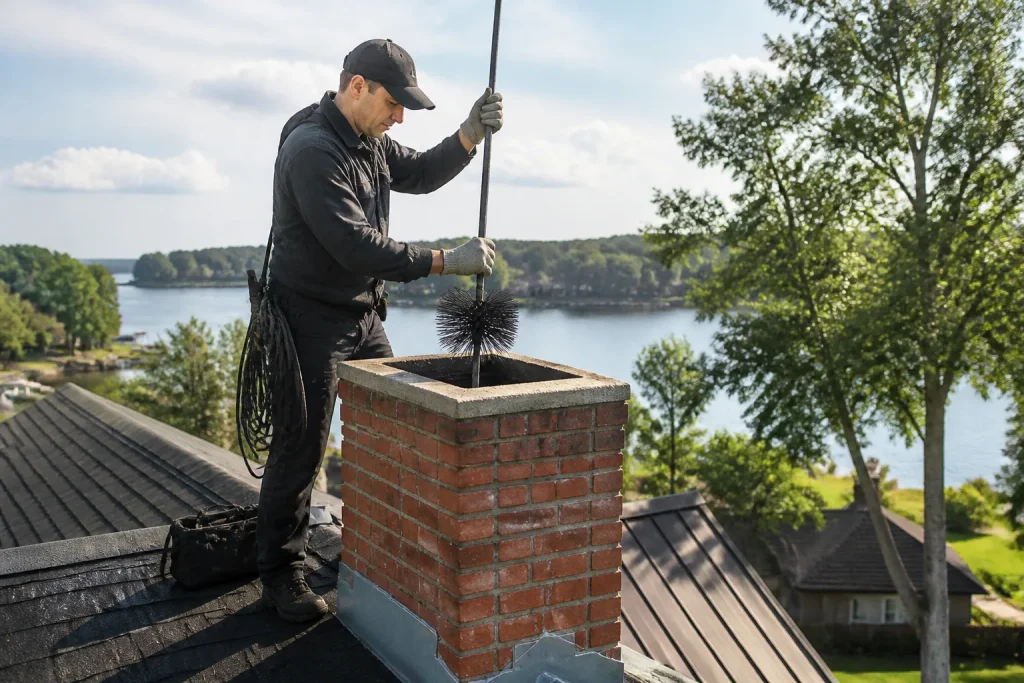
The most dangerous chimney problem in a Lake Jeanette home usually gives you nothing dramatic to react to. Stage 3 glazed creosote, the hard, tar-like deposit that fuels chimney fires, has no smell, puts out no visible smoke, and looks like nothing from the living room. The only way to know it’s there is to put a camera and a light where you can’t reach. So instead of a scare list, here’s how to read the quiet signals as a diagnostic system, and when to call Chimney Sweep Lake Jeanette.
If you’d rather not climb around the firebox to sort this out yourself, call (877) 492-3599. Estimates are free.
How much creosote buildup is too much?
Creosote becomes a real problem at the third-degree stage, when it turns glazed, shiny, and hard rather than flaky or sooty. That’s the layer that ignites at high temperature and burns hot enough to crack a flue. Below that, first and second-degree buildup (light soot and crusty flakes) is common and manageable with a proper sweep. The catch is that you can’t reliably identify the stage by eye from the firebox, because the worst of it settles higher up the flue.
Signs that point specifically to creosote and not to a structural issue:
- A dense, acrid, tar-like smell in the room, especially in warm weather when the flue isn’t drafting upward.
- Black, shiny, or glassy deposits visible on the smoke chamber walls, if you can see that high.
- Smoke rolling back into the room instead of going up, which often means restricted flow from buildup.
- A fire that’s harder to get going and burns sluggish compared to previous winters.
These are load-and-fuel signals. The response is a sweep, not a repair. In our experience, homeowners conflate creosote symptoms with structural ones all the time, and that mix-up sends them down the wrong path: they either panic about a rebuild they don’t need or ignore a real masonry issue that a sweep won’t touch.
Why does my chimney smell worse after it rains?
A strong chimney odor after rain is a reliable sign of two things happening at once: negative pressure pulling damp air down the flue, and creosote that has soaked up moisture. Creosote is porous, so when rain and humidity reach it, the deposits release that sharp, smoky, sour smell back into the house. Most homeowners blame the weather or a drafty house. The chimney is usually the source.
Here in Lake Jeanette, this shows up most in the shoulder seasons and on humid days, not just during a storm. Three parts of the system usually combine to cause it:
- A missing or damaged cap that lets water straight down the flue.
- A saturated creosote layer that holds the moisture and re-releases it indoors.
- Pressure imbalance in the house, so the chimney acts like an intake instead of an exhaust.
The odor isn’t the danger by itself, but it’s a useful early indicator. It tells you water is getting in and deposits are heavy enough to hold it. Both of those get worse quietly. A chimney cap & crown inspection is often where we start, because a failed cap is one of the most common points of water intrusion we find, and fixing it is far cheaper than repairing the masonry it damages over time.
What does white staining on the outside of my chimney mean?
White, chalky staining on exterior brick or mortar is called efflorescence, and it signals active moisture moving through the masonry, not a cosmetic flaw. As water passes through the brick and mortar and evaporates at the surface, it leaves mineral salts behind. Seeing it means water is getting in somewhere and finding its way out through the wall. Left alone, that cycle causes spalling (brick faces flaking off), crumbling mortar, and eventually structural weakening.
This is the sign homeowners most often misread. They assume it’s a stain to power-wash off, then the staining comes back the next season because the water source was never fixed. On a Lake Jeanette chimney, the culprits we look for are a cracked crown, a failed cap, and deteriorated mortar joints near the top. All three live at the exposed end of the system where freeze-thaw cycles do the most damage.
Worth being clear on the distinction: efflorescence is a structural-water signal, not a creosote signal. It calls for moisture control and masonry attention, not a sweep. Where creosote questions get answered by cleaning, white staining gets answered by careful inspection of the cap, the crown, and the brickwork itself.
How often should a Lake Jeanette chimney be cleaned?
The honest answer: there’s no fixed calendar, because how fast buildup accumulates depends heavily on how you burn. The general guidance is to sweep when deposits reach roughly an eighth of an inch, which for a frequent wood-burner can happen in a single season. Three variables move that number in Lake Jeanette homes more than anything else:
- How often you burn. A fireplace used most cold nights during a NC winter builds creosote far faster than one lit a handful of times.
- What you burn. Seasoned, dry hardwood produces far less creosote than green or unseasoned wood and smoldering fires. Wet wood is the single biggest accelerator we see.
- Insert versus open fireplace. A wood insert runs hotter and more efficiently but concentrates exhaust, so deposit patterns differ from an open hearth, where more heat escapes up the flue.
Climate matters here too. NC winters are cold enough for steady fireplace use but mild enough that people often burn part-time, in shorter, cooler fires. Those smoldering, low-air fires generate more creosote than a hot, well-drafted burn. If you want a real answer for your chimney rather than a guess, an inspection tells you exactly what’s inside the flue.
Can I just look up the chimney from the firebox?
No, a look from the firebox is not a substitute for a camera inspection, because the flue bends and the most dangerous deposits accumulate above the smoke chamber, where you simply can’t see from below. The firebox view shows you the first few feet and little else. The smoke chamber and the upper flue, where glazed creosote and hidden cracks tend to form, stay out of sight.
This is why a “looks clean to me” assessment is the most common reason deferred maintenance keeps getting deferred. A proper inspection runs a camera down the flue and gives you an actual picture of the liner condition, the deposit level, and any gaps or damage.
Should the inspection turn up a failed or cracked liner, relining is a real repair, not a cleaning add-on. That’s the kind of job where we turn to a DuraFlex liner system, and where materials matter: we work with contractor-grade products like Olympia Chimney and Famco rather than hardware-store substitutes, because they’re what the chimney itself was designed to work with. A liner is what contains carbon monoxide and keeps a fire off the framing. From the firebox to the crown, we handle the whole system, so you’re not chasing down a second company to finish the job.
When should you call a pro instead of waiting?
Call when the signs point to something you can’t safely assess yourself. Glazed creosote, a smell that returns after rain, white staining on the exterior, or a fire that drafts poorly all warrant a professional look. These are exactly the situations where a trained inspection either gives you a clean bill or catches a problem while it’s still affordable to fix.
The two things proper chimney care prevents are a chimney fire and a carbon monoxide problem, and both are the kind of failure that doesn’t warn you. Our technicians have up to 10 years of experience reading these signals, and our inspection tells you in plain language what’s happening inside the flue and what, if anything, needs doing. We don’t recommend work without evidence you can see for yourself, and we’ll tell you plainly when something can safely wait.
Related services in Lake Jeanette: If your signs point to a full clean, see our chimney sweep. For firebox damage or a cracked firebox, our fireplace repair handles resurfacing with HeatShield, a proper certified repair process rather than a patch. For moisture intrusion at the top, our chimney cap & crown service targets the two most common entry points.
The Bottom Line
Most serious chimney trouble shows up as small, easy-to-dismiss signals: a smell after rain, white stains on the brick, a fire that’s harder to light. Read them as a system and you’ll act before a failure instead of after. Creosote symptoms call for a sweep; moisture and structural symptoms call for inspection and repair. And a look from the firebox isn’t enough to tell you which is which. If you’re in Lake Jeanette and need help, Chimney Sweep Lake Jeanette offers free estimates. Call (877) 492-3599. We answer 24/7. Fast dispatch from 7am to 7pm, Sunday through Friday.
Frequently Asked Questions
You need it cleaned when deposits reach roughly an eighth of an inch or when you see glazed creosote, and you don’t need a sweep if the flue is already clear. A camera inspection answers the question with evidence instead of a pitch. Call (877) 492-3599 for an honest assessment.
Creosote problems are driven by buildup and show as odor, smoke rollback, and sluggish fires, and they’re solved by cleaning. Structural problems show as white efflorescence, damaged mortar, or a failed cap, and they need repair. If you’re not sure which you have, an inspection sorts it out. Call (877) 492-3599.
Rain reaches porous creosote and it re-releases that smoky odor indoors, often helped along by a missing cap and negative pressure. It points to moisture intrusion and heavy deposits at the same time. Call (877) 492-3599 for a free estimate.
Creosote keeps building toward the glazed stage that fuels chimney fires, and small water leaks quietly damage masonry and the liner. Neither gives you a dramatic warning until it’s serious. We answer 24/7 at (877) 492-3599, with fast dispatch from 7am to 7pm, Sunday through Friday.
Written by the team at Chimney Sweep Lake Jeanette.
Need Chimney Cleaning Help?
Call Chimney Sweep Lake Jeanette - the local pro we connect you with is licensed and insured, with free written estimates in Lake Jeanette.
(877) 492-3599