
Last updated November 25, 2026
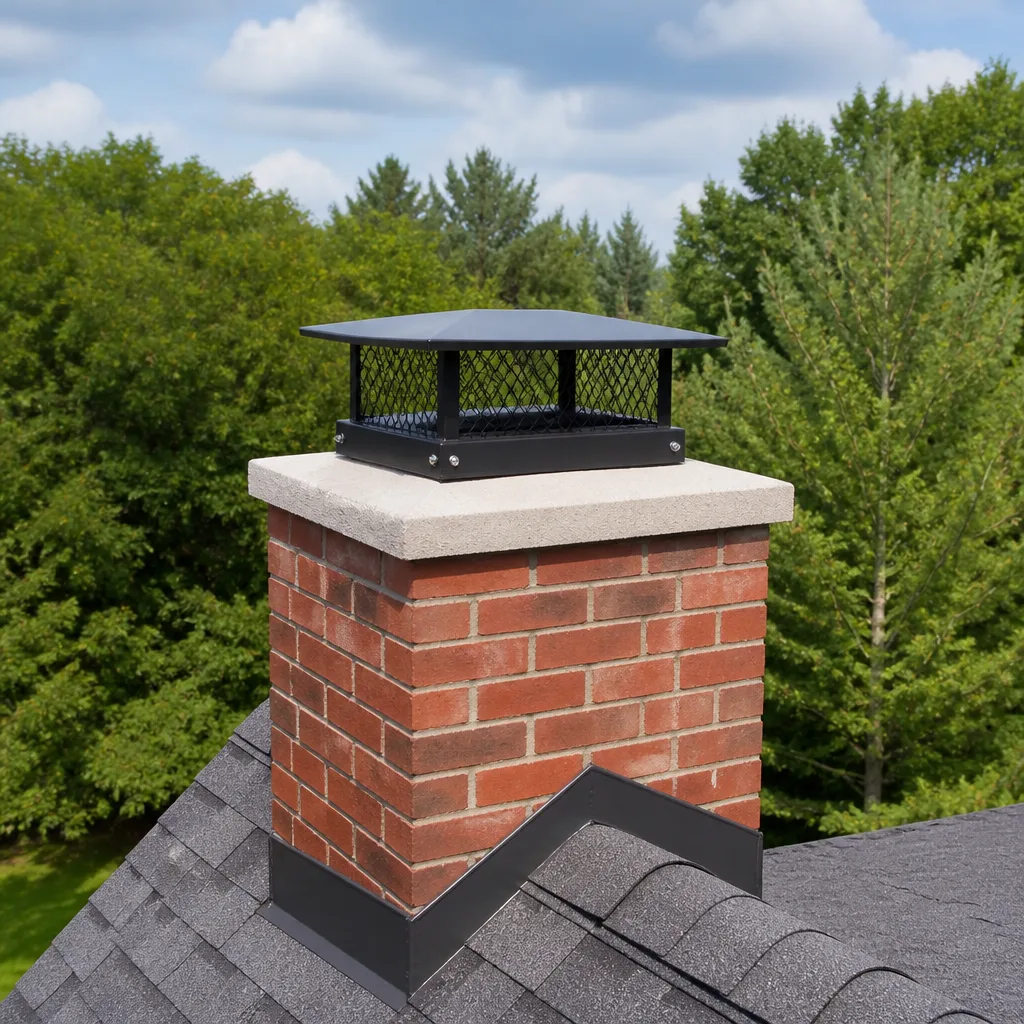 Sweep & inspection
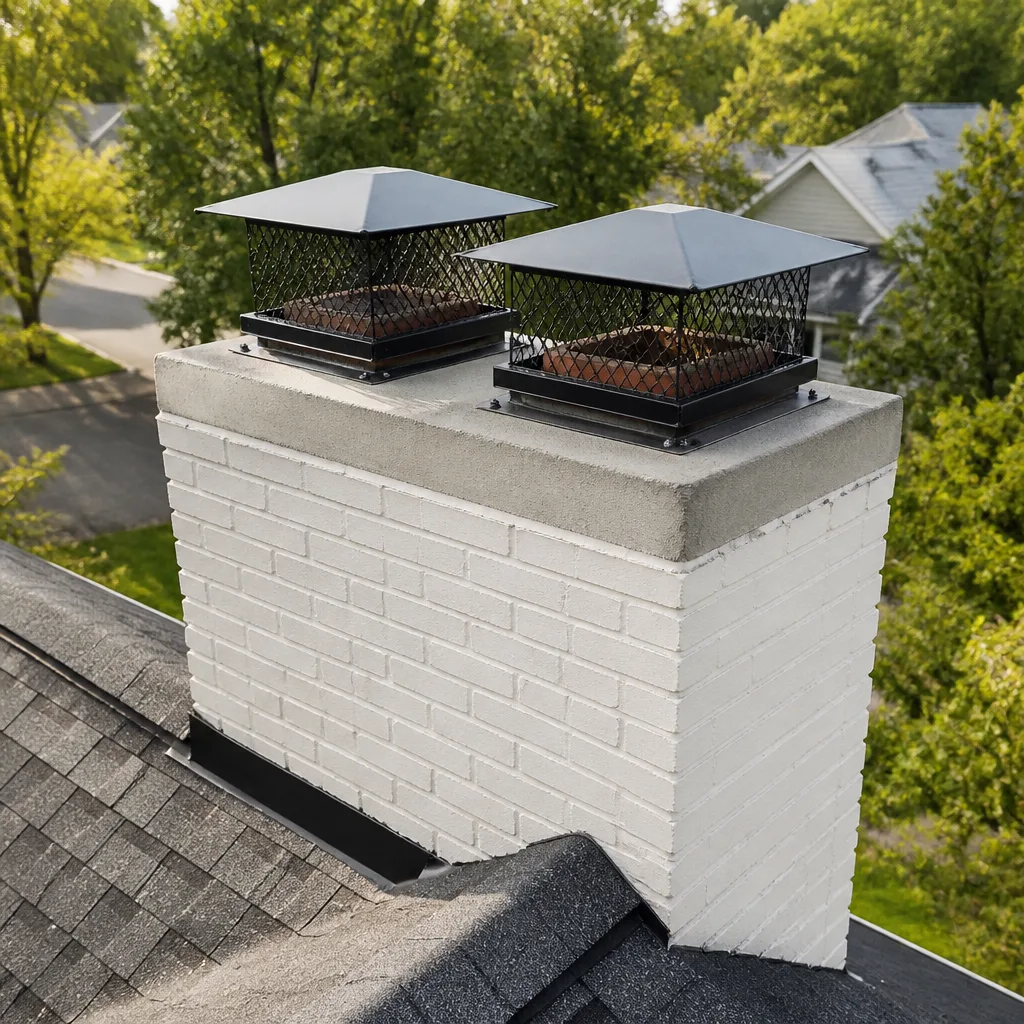 Caps & crowns
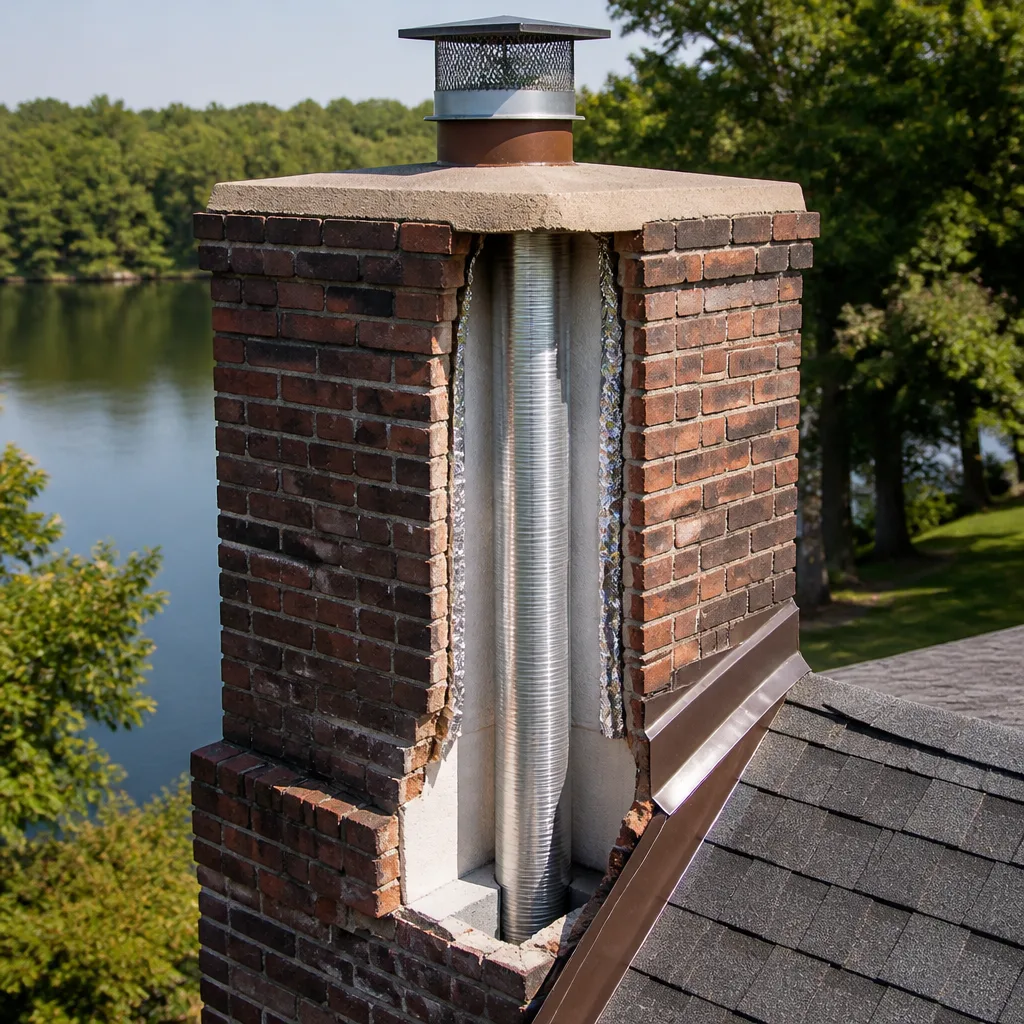 Flue relining
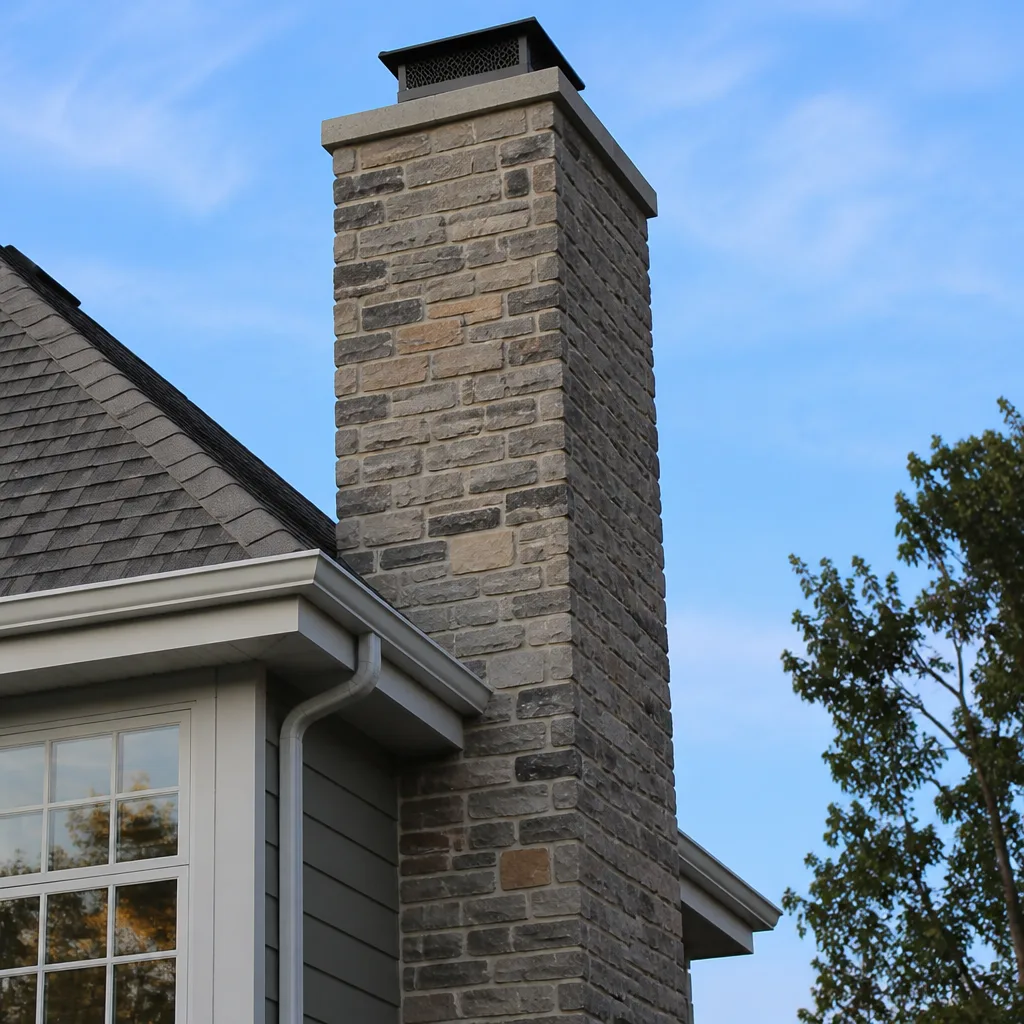 Masonry repair
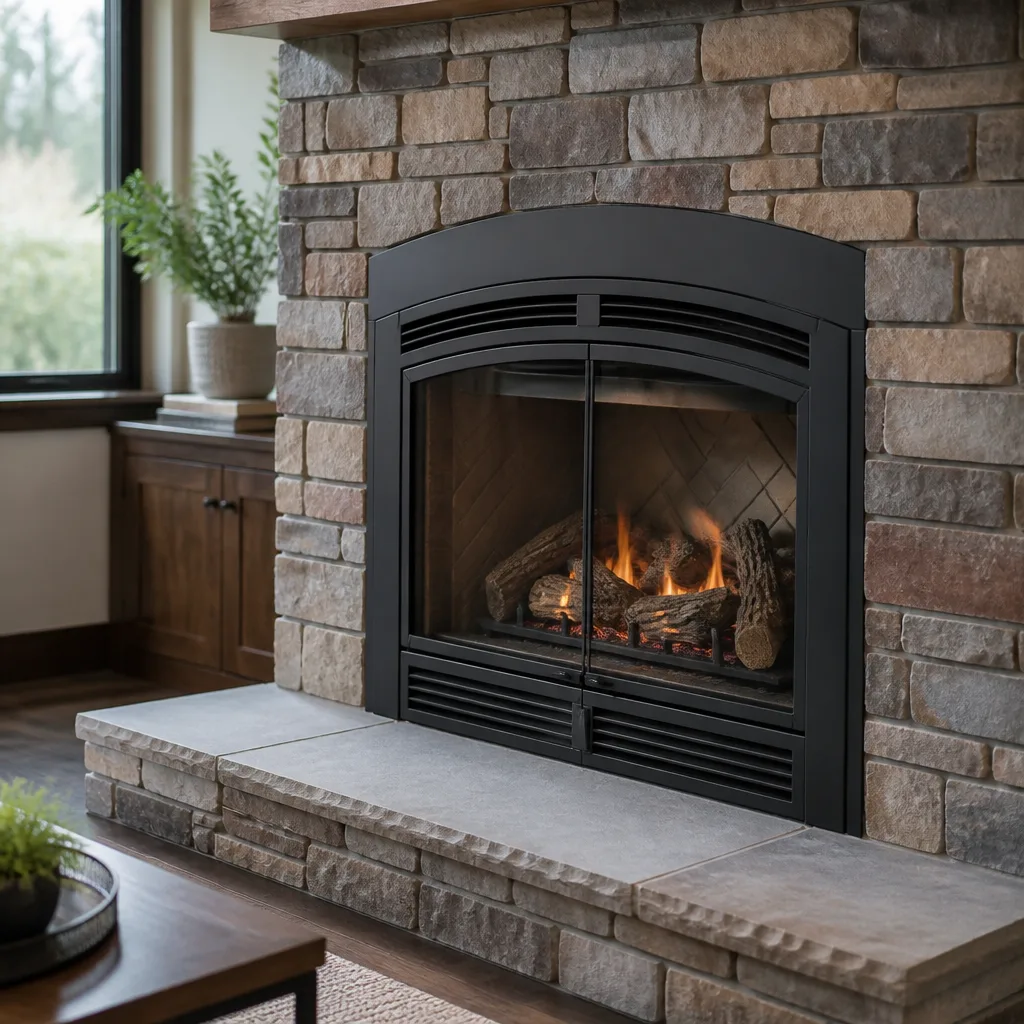 Gas fireplace service
Level 1 sweep and inspection to the NFPA 211 annual standard - flue, crown, cap, and flashing checked and photographed
Chimney sweep logs do not sweep chimneys. They loosen some creosote - which then falls where a brush and vacuum still have to collect it.
DIY vs Professional Chimney Cleaning: The Lake Jeanette Homeowner’s Decision Guide
Most homeowners who think about cleaning their own chimney are picturing the same thing: a brush on a rod, a little soot, a job done. That picture is accurate for one narrow situation and wrong for almost every other. A consumer brush kit is built to lift loose, powdery soot from a flue that’s already in decent shape. It is not built for the glazed, tar-like creosote that actually fuels chimney fires, and dragging a brush through a heavy deposit can knock chunks loose that then lodge in the flue and narrow the path for smoke. This guide walks through what a DIY cleaning can and cannot accomplish in a Lake Jeanette home, what a professional rotary system and camera inspection actually add, and how to decide which one your chimney needs.
Quick Answer
A DIY chimney cleaning can handle light, powdery soot in a flue that’s already clean and sound. It cannot identify creosote stage, check liner integrity, or read smoke chamber condition, and those are the three things that decide whether your chimney is safe. For anything beyond routine soot in a well-maintained flue, a professional sweep with camera inspection is the only way to know what’s actually happening inside.
Styles & brands we work with
- Sweep & inspection
- Caps & crowns
- Flue relining
- Masonry repair
- Gas fireplace service
Table of Contents
- What a DIY Chimney Cleaning Can Actually Accomplish
- What a DIY Cleaning Cannot Do: Creosote Stages and Liner Integrity
- The Equipment Gap: Rotary Systems, Cameras, and Smoke Chamber Assessment
- The Insurance and Documentation Dimension
- When DIY Maintenance Is Genuinely Appropriate
- The Honest Cost Comparison
- Chimney Behavior in Lake Jeanette Homes
- A Decision Framework: Which Chimney Needs Which Approach
What a DIY Chimney Cleaning Can Actually Accomplish
A consumer-grade chimney brush does one job well, and it’s worth being clear about what that job is. These kits are designed for maintenance-level soot removal: the light, dry, powdery residue left by a flue that’s already been swept, burning reasonably dry wood, and staying within its annual service rhythm. If that describes your chimney, a brush can knock the top layer of soot off the walls and keep the flue from building up between professional visits.
Specifically, a DIY cleaning can:
- Remove light, powdery soot from accessible flue walls
- Clear loose ash and debris from the firebox floor
- Knock down cobwebs or dust near the damper
- Give you a rough sense of whether soot is accumulating faster than expected
For a homeowner in Lake Jeanette with a newer flue, a swept chimney, and a modest burn habit, that’s a real contribution. We’ve seen plenty of fireplaces in the neighborhoods around Lake Jeanette where the sweep log says the chimney was serviced and the flue has stayed clean through a light season.
Here’s the catch. The first time you push a brush into a flue with heavier deposit, you’re no longer in the maintenance category. You’re attempting removal, and removal is a different job with different tools and different risk. Creosote doesn’t behave like soot when it’s thick; it behaves like tar, and it comes off in chunks rather than dust.
What a DIY Cleaning Cannot Do: Creosote Stages and Liner Integrity
Creosote builds in stages, and the stages matter more than the volume. Stage one is the powdery, flaky soot a brush handles. Stage two is the crusty, flaky, brittle material that clings harder and often needs a rotary head to break it loose. Stage three is glazed, hardened, tar-like creosote fused to the flue wall, and it is the deposit most closely associated with chimney fires. A consumer brush will not remove stage three creosote. It will skip across it, and in the process it may dislodge a chunk of stage two material that then drops down the flue and blocks it.
That last part is the piece most homeowners don’t hear. When a homeowner dislodges creosote and doesn’t have a way to see the flue or vacuum the debris with professional suction, the chimney can end up worse off than it started. The fire risk the cleaning was supposed to address is still present, and now there’s a partial obstruction adding smoke back-up to the problem.
A brush also can’t answer the questions that actually determine safety:
- Is the liner cracked, separated, or corroded?
- Is the smoke chamber properly shaped and parged, or is it rough and full of buildup?
- Is there a gap at the top plate or a crown defect letting water in?
- Has the flue been resized incorrectly for the appliance?
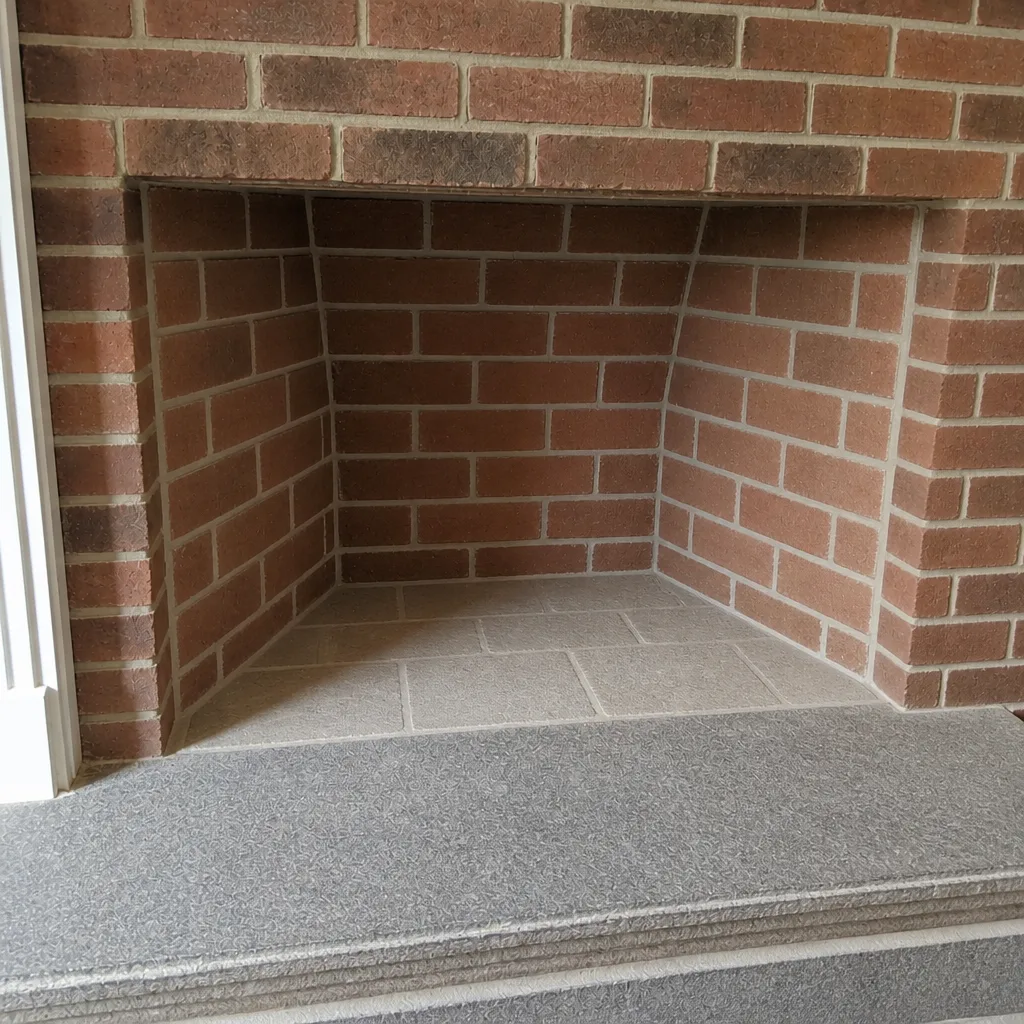
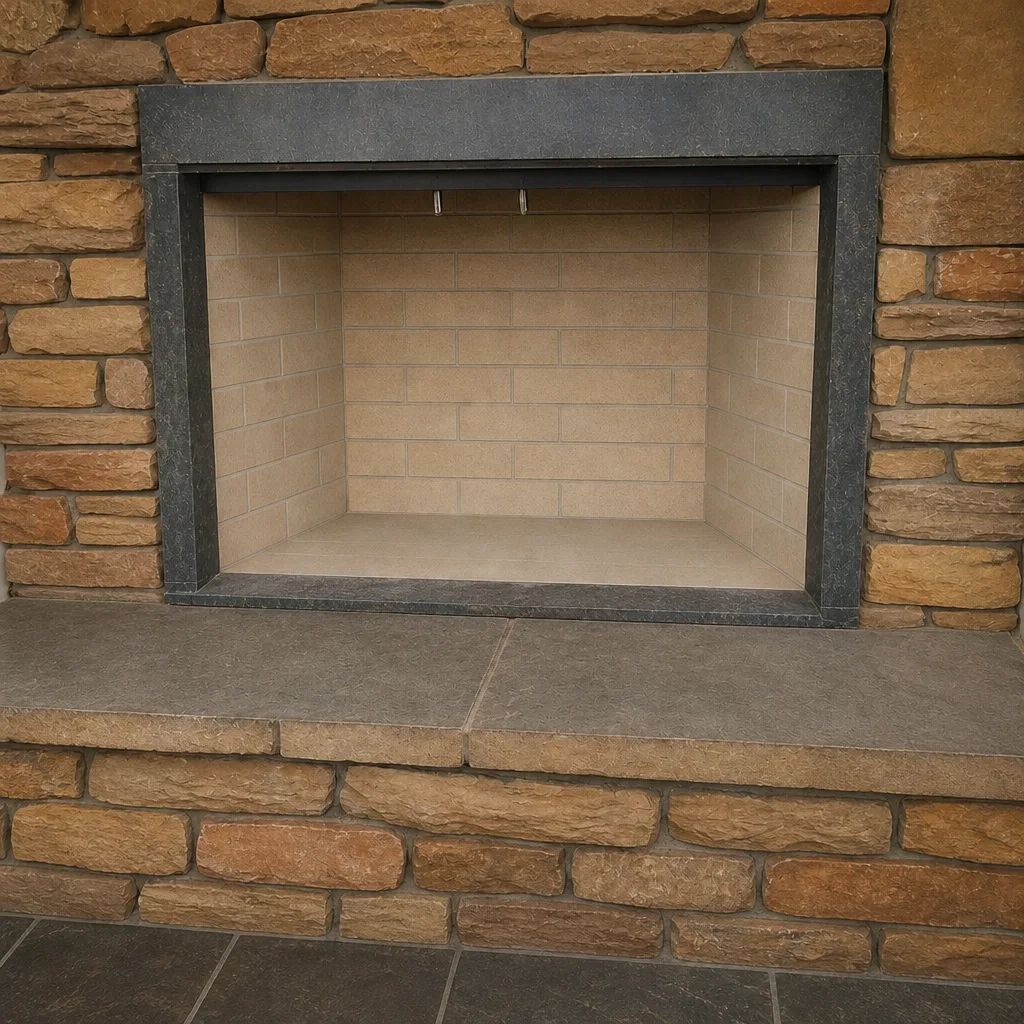
None of those questions are answerable from the firebox with a flashlight. They require camera inspection, and that’s the diagnostic layer a DIY cleaning can’t replicate. For firebox restoration, addressing the gaps and cracks around the firebrick and mortar joints, our fireplace repair service works with HeatShield specifically because it’s a certified resurfacing process, not a patch.
The Equipment Gap: Rotary Systems, Cameras, and Smoke Chamber Assessment
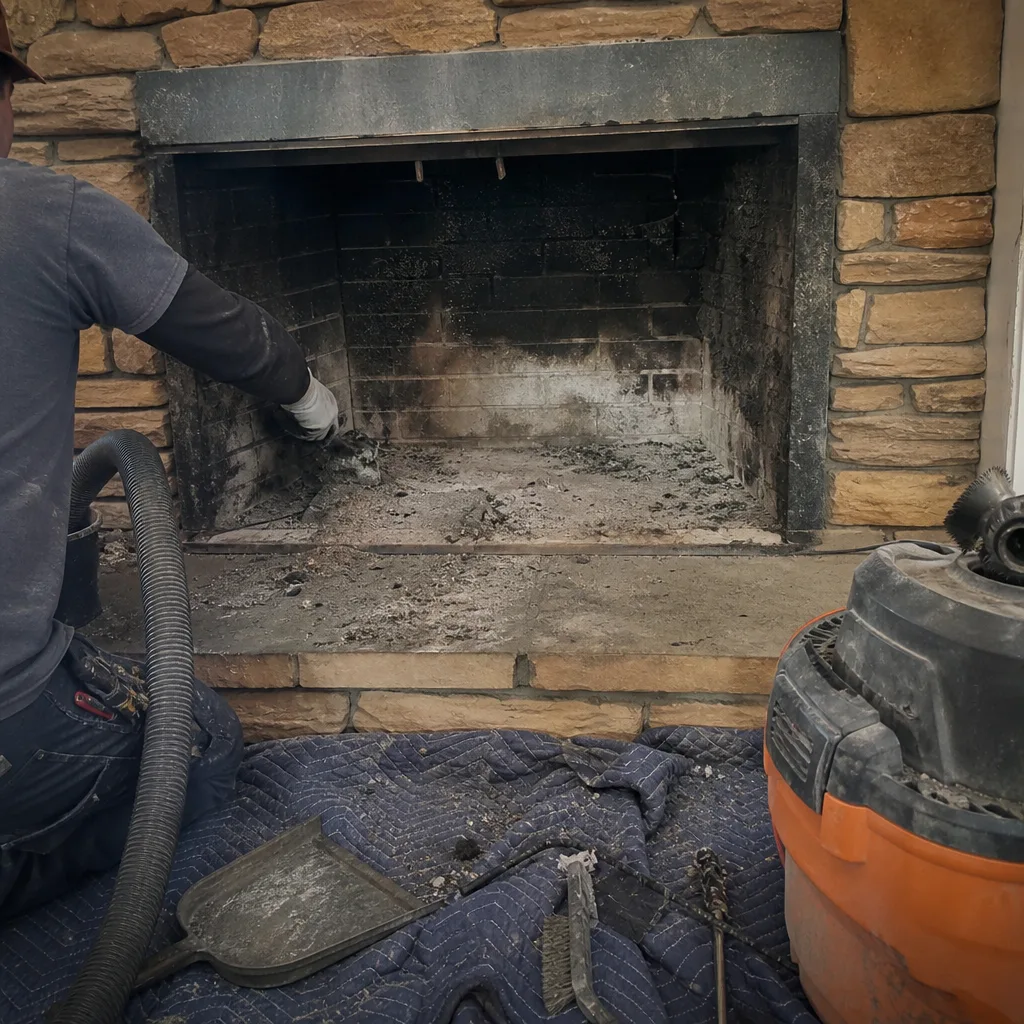
The gap between a homeowner kit and a professional setup isn’t a matter of degree. It’s a matter of category. A professional sweep carries a rotary cleaning system that spins a weighted head against the flue wall to break creosote loose rather than drag across it, a high-powered vacuum that captures the debris at the firebox and keeps it out of your living room, a video inspection camera that records the flue top to bottom, and a set of mirrors and hand tools for the smoke chamber.
Each of those adds something a consumer kit cannot:
- Rotary cleaning head. Breaks up stage two and stage three creosote instead of skipping over it, and it’s sized to the flue, so it doesn’t damage the liner.
- Professional vacuum with HEPA filtration. Captures the fine dust a shop vac pushes back into the room.
- Video inspection camera. Lets the technician see and photograph every joint, offset, and termination in the flue, which is the only way to find a hairline crack.
- Smoke chamber mirror and hand tools. The smoke chamber is the sloped zone above the damper and below the flue. It’s the most overlooked part of most chimneys, and it’s where creosote tends to accumulate in corners that no brush reaches.
- Creosote classification. A trained technician tells you which stage of deposit you have, because the stage drives the recommendation. Stage one and stage three call for different responses.
When a technician identifies a damaged liner, a proper relining job with a system like DuraFlex addresses both containment of combustion gases and fire-code compliance. That’s a scope a homeowner simply cannot reach with a brush kit. If the flue cap is missing or the crown is cracked, we address both through chimney cap & crown work, because those are the two most common entry points for water.
The Insurance and Documentation Dimension
Most homeowners’ insurance policies require documentation of professional inspection for a chimney-related fire claim to be honored. That’s the part of the DIY-versus-professional question people underweight until the moment it matters. If a chimney fire occurs and the only record is a receipt for a brush kit from a hardware store, a claims adjuster has no third-party evidence the chimney was ever assessed. A professional inspection with a written report and photographs creates the paper trail.
What that documentation typically includes:
- A dated report naming the inspection level performed
- Photographs or video capture of the flue interior
- A written description of any conditions found
- Recommendations for any repair, with a scope of work
Beyond claims, that documentation matters when you sell a Lake Jeanette home. Buyers’ inspectors routinely flag a fireplace as “condition unknown,” and a recent professional inspection report clears that flag. It also matters when you’re a new homeowner who inherited a chimney of unknown history: the report gives you a baseline.
We’ve seen the reverse plenty of times, where a homeowner bought a Lake Jeanette property, used the fireplace for a season, and only learned at inspection that the flue had never been properly assessed. A professional sweep or chimney sweep closes that gap with evidence you can review, not a verbal assurance.
When DIY Maintenance Is Genuinely Appropriate
We’re not going to pretend all chimney care requires a technician. There are real maintenance tasks a homeowner can perform safely between professional visits, and doing them keeps a chimney in better shape between sweeps.
- Clear visible debris from the firebox. Ash, leftover logs, and fallen leaves from a bird nest above the damper are all fair game. Use a dustpan and a metal container, and don’t stir up more dust than you can control.
- Check damper operation. Open and close the damper fully. It should move without grinding and should seal cleanly. A stuck damper is a functional problem that needs service.
- Look for new cracks. In the firebox brick, the mortar joints, and the fireback, hairline cracks happen. Note where they are and mention them at the next inspection rather than trying to patch them yourself.
- Confirm the cap is intact. From the ground with binoculars, check that the cap and its mesh are still in place and not rusted through.
- Keep a burn log. Note how often you use the fireplace and what you burn. It helps the technician at the next visit understand the creosote pattern.
What definitely does not belong in the DIY column: brushing a chimney with heavy deposit, spraying chemical cleaners into a flue you haven’t inspected, attempting to remove a cap, or working on the roof. The height risk alone makes roof work a professional call. A trained technician on a proper ladder setup can do the same job in a fraction of the time, and they’ll spot the structural issues that a homeowner hanging off a ladder will not.
The Honest Cost Comparison
Here’s where the usual DIY argument breaks down. The comparison isn’t a brush kit versus a sweep fee. It’s the total cost of the DIY path, including the equipment, the time, the risk of a partially cleaned flue, and the cost of missing a liner crack, against the flat fee of a professional sweep that comes with camera inspection and a written report.
What a DIY path actually costs:
- Equipment. A consumer brush kit, rods, drop cloth, and a shop vac, bought once, then used occasionally.
- Time. An afternoon of roof access, setup, brushing, cleanup, and disposal, repeated each season.
- Risk of partial cleaning. A flue that looks clean at the firebox but holds stage two or stage three creosote on the wall.
- Undiagnosed conditions. A liner crack, a deteriorated crown, or an out-of-shape smoke chamber may go unanswered until it produces a symptom you can’t ignore, like smoke back-up or smoke odor in the room.
A professional sweep is priced per job by a written estimate, and the price is agreed before booking. That estimate typically covers the sweep itself, a visual inspection with a camera in the flue, and a photo report. The final price is set by the estimate, not by an hourly guess. Call (877) 492-3599 for an exact quote; the estimate is free.
For a Lake Jeanette homeowner who plans to use the fireplace for years, the honest math is that a single annual sweep with inspection costs less than the total of a brush kit plus a season of trial-and-error cleaning plus the diagnostic work that eventually becomes necessary because the DIY attempt never answered the liner question. If a liner replacement turns out to be the answer, a DuraFlex system resolves the containment and code question in one step.
Chimney Behavior in Lake Jeanette Homes
Chimney condition is a local story, not a generic one. Lake Jeanette’s climate runs humid in summer and damp in shoulder seasons, and that matters for the building envelope around the chimney. A cracked crown or a missing cap lets water into the masonry through summer rain, and water that gets in has to get back out. Freeze-thaw cycles in winter work on the masonry joints themselves, which is why crown and cap condition has more effect on a chimney here than it does in a dry climate.
The burning pattern matters too. In a neighborhood where fireplaces are used consistently through winter and shut down for the long warm stretch, creosote accumulates at a different rate than in homes that burn all year. Homes that see heavy use during a few cold weeks and then go dark tend to build glazed creosote faster than homes that burn a moderate fire most nights, because a hotter, more consistent fire burns cleaner. That’s a generalization, and it’s why inspection rather than assumption is the way to determine stage.
Housing stock varies across Lake Jeanette, and that affects the approach. Older masonry chimneys carry decades of accumulated wear in the firebox and smoke chamber, and they’re where firebox resurfacing and smoke chamber work show up most often. Newer construction may have prefabricated flue systems that need a different inspection method. Wood-burning inserts and freestanding stoves have their own flue configurations and their own creosote patterns. In all of these, the underlying questions are the same: is the flue sound, is it clear, and is the liner intact?
For a Lake Jeanette homeowner calling in, we work with contractor-grade materials across the full system: Gelco and Copperfield for crown, cap, and masonry work, HeatShield for firebox resurfacing, DuraFlex for relining, and Olympia Chimney and Famco for the components that keep a chimney sealed from the top. Those are the products restoration professionals specify, not hardware-store substitutes. Having the same team handle the inspection, the sweep, the crown, and any relining means there’s no handoff mid-job and no gap between who found the problem and who fixed it.
A Decision Framework: Which Chimney Needs Which Approach
The question “DIY or professional?” resolves quickly once you map your chimney to a category. Use these steps:
- Do you have a recent professional sweep on record? If yes, and the flue was documented clean, light DIY maintenance between visits is reasonable.
- Has the fireplace been used through a full season since the last sweep? If yes, that season’s creosote is unassessed, and a professional sweep with camera inspection is the next step.
- Is the chimney in a home you just bought? Yes means professional inspection first, no exceptions. You don’t know the chimney’s history, and neither does a brush.
- Have you noticed smoke back-up, a strong smoke odor in the room, or a stuck damper? Any of those is a diagnostic question, not a maintenance question.
- Is the cap missing, damaged, or rusted through, or is the crown cracked? That’s a professional repair, covered by our Chimney Sweep Lake Jeanette team as part of a full-system service visit.
- Are you on a schedule of annual cleaning with documented reports? Good. Keep it. Annual cleaning is the pattern that prevents the surprises.
The categories that come out of that framework are simple. A clean, documented, lightly used flue in good repair is a candidate for homeowner maintenance. A chimney that’s over a season past its last sweep, or one with any history of smoke problems or water intrusion, is a case for a professional inspection. And any chimney with a firebox or liner question is a professional call from the start, because that’s where the diagnostic capability actually lives.
If you’re not sure which category you’re in, call and describe what you know. We can tell you whether it sounds like a maintenance case or a diagnostic one before anyone gets on a ladder.
Common Mistakes to Avoid
- Brushing a flue you haven’t inspected. A brush on heavy deposit can break chunks loose that then block the flue. The result is a chimney that’s no safer than it was, and harder to clear.
- Assuming a clean firebox means a clean chimney. The firebox is the bottom of the system. The flue, the smoke chamber, and the crown are where problems actually hide.
- Burning green or unseasoned wood to save money. Wet wood produces more creosote, and it does so faster than a brush can keep up with. Season your wood and burn hot fires.
- Skipping an inspection because the chimney “seems fine.” Smoke back-up and liner cracks don’t announce themselves in the firebox. The absence of symptoms isn’t evidence the chimney is sound.
- Patching firebox cracks with mortar from a big-box store. Firebox mortar is not the same as masonry mortar. HeatShield is a resurfacing process designed for firebox conditions, and a DIY patch tends to fail the first cold season.
- Working on the roof without a proper ladder and fall protection. The vast majority of chimney-related injuries we hear about happen on the roof, not in the flue. Height work is not a homeowner task.
- Treating a professional inspection report as an upsell. The report is the evidence. Read it. If it recommends a repair you’re unsure about, ask what happens if you wait, and expect a clear answer.
See the difference
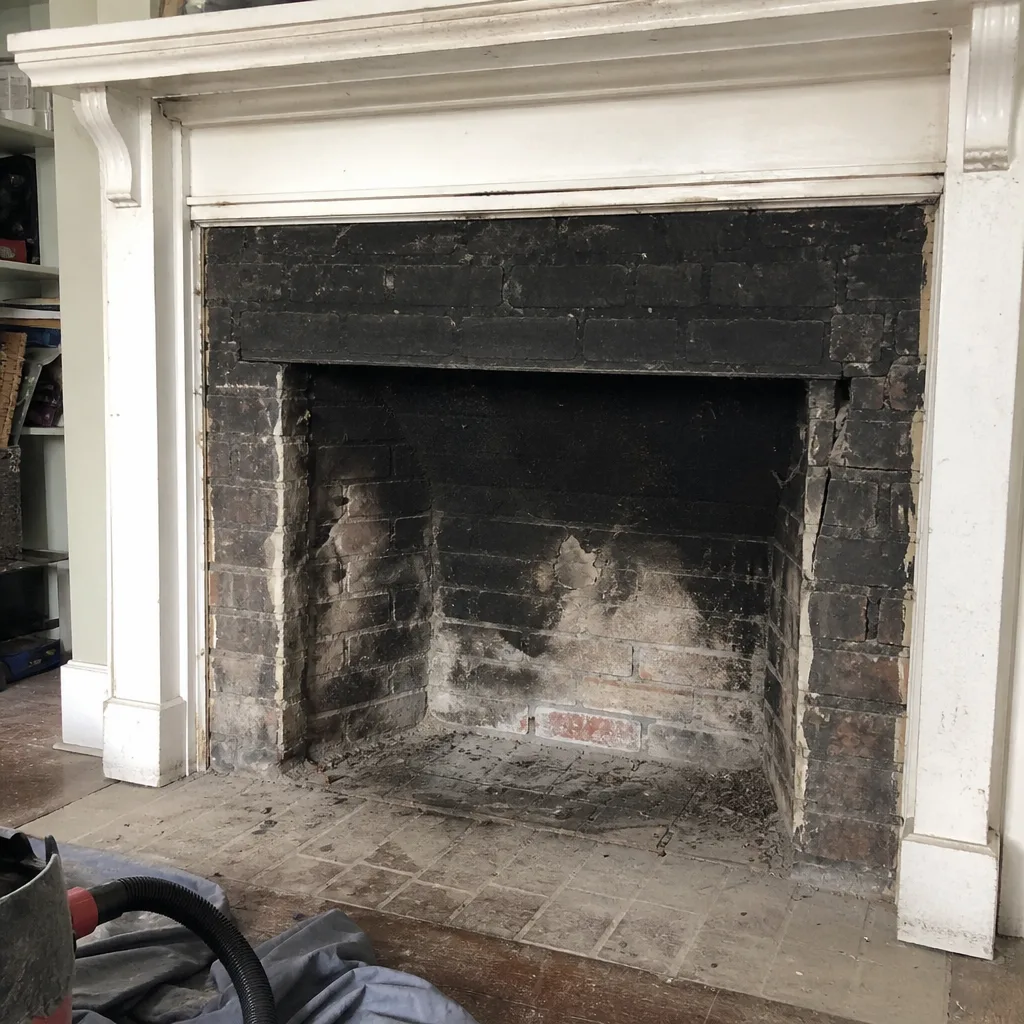 Before
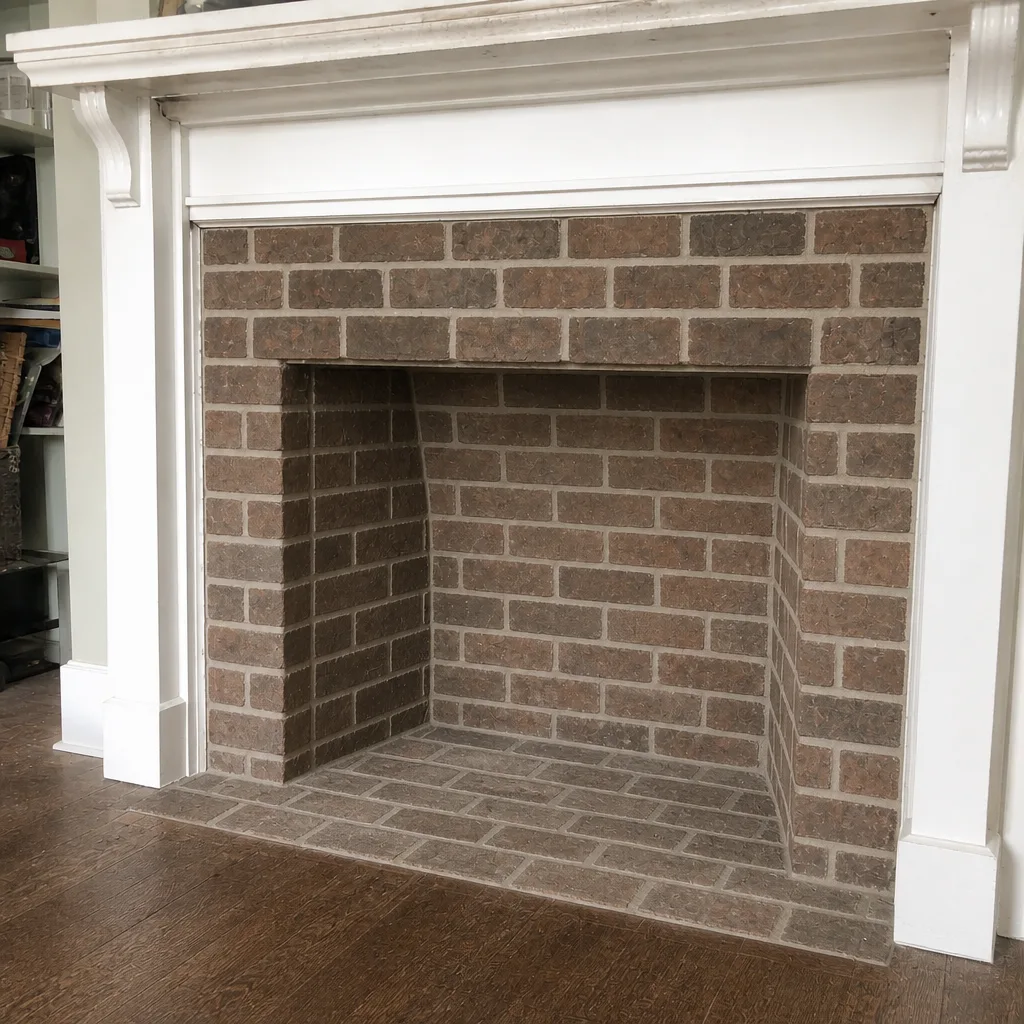 After
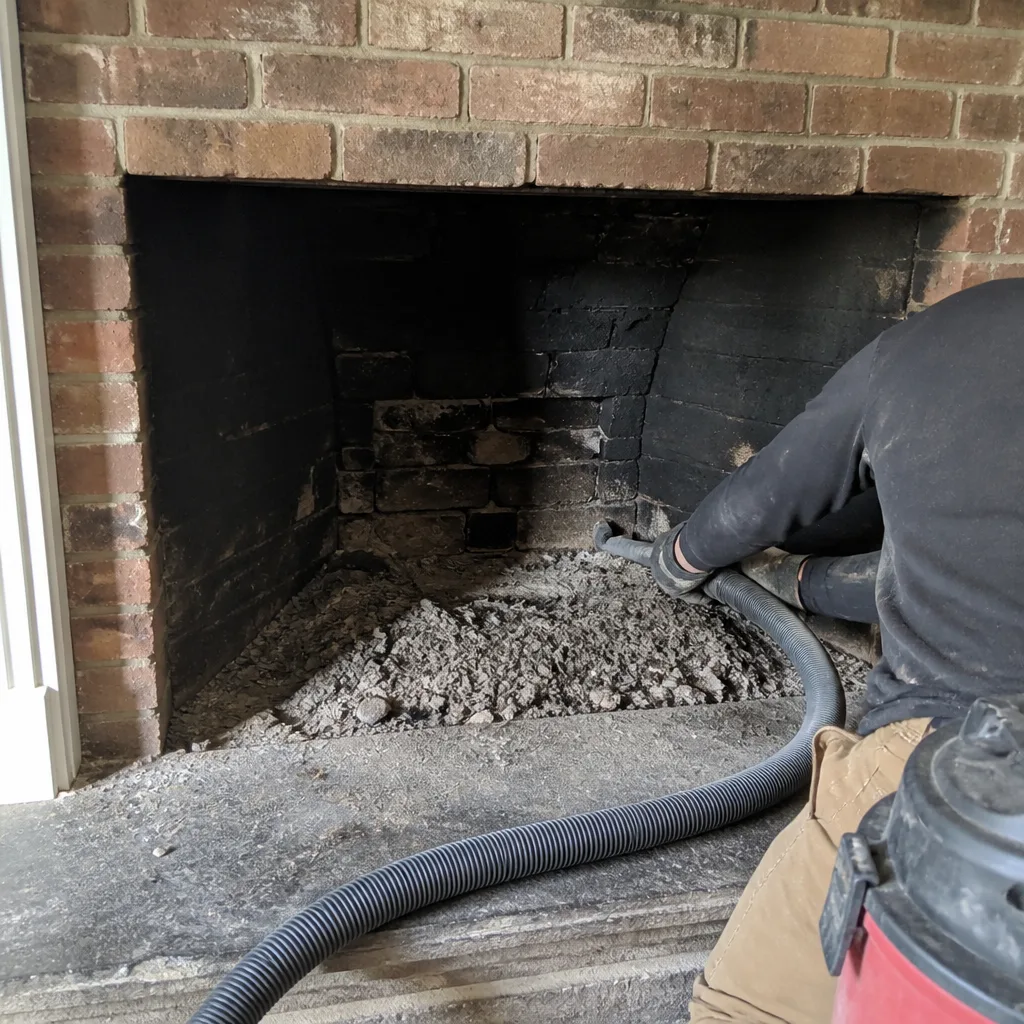 Before
 After
 Before
 After
When to Call a Professional
Call a professional if any of these apply to your chimney: it hasn’t been inspected in a year or more, you’ve just moved into a home with a fireplace, you’ve noticed smoke rolling into the room when the fire is lit, you smell smoke in the house on a cold morning, the cap is missing or the crown is cracked, the firebox shows cracks or spalling, or you’ve burned through a season without documenting what’s happened inside the flue. Those are all diagnostic questions, and the only honest answer comes from camera inspection. Call (877) 492-3599. We answer 24/7, and fast dispatch runs from 7am to 7pm, Sunday through Friday. Chimney Sweep Lake Jeanette offers free estimates on chimney sweeping, inspection, and repair, and the written estimate sets the final price.
Frequently Asked Questions
You can safely remove light soot from a chimney that’s already been swept and documented clean, and you can manage the routine tasks around the firebox. You cannot safely clean a flue with heavy creosote or diagnose liner condition without a camera, and attempting either is where the risk sits. If you don’t have a recent professional sweep on record, start there. Call (877) 492-3599 for an exact quote; the estimate is free.
The general rule is once a year for a chimney in regular use, and more often if you burn heavily, burn unseasoned wood, or use a wood stove as a primary heat source. A professional sweep with camera inspection at the annual visit is what turns “swept” into “inspected and swept.” Skipping the annual visit is the pattern that lets creosote and liner wear accumulate undetected. Call (877) 492-3599 to book your annual sweep in Lake Jeanette.
Two things that are both preventable: creosote builds until it reaches the stage that supports a chimney fire, and liner defects go unnoticed until they produce smoke back-up or combustion gas reaches the living space. Neither of those announces itself in advance. A skipped sweep doesn’t make a chimney fail immediately, but it does mean the fire risk the cleaning was designed to prevent remains present. If you’re overdue, (877) 492-3599 gets you on the schedule; the estimate is free.
Not always. A liner is recommended when camera inspection shows a crack, separation, corrosion, or a flue size that doesn’t match the appliance, and none of those can be confirmed without seeing the flue. If the inspection shows a sound liner, we’ll say so. If it shows a defect, we’ll show you the photo. That’s the standard we hold to: nothing is recommended without camera evidence you can see for yourself. Call (877) 492-3599 for a free estimate in Lake Jeanette.
Most policies require documentation of professional inspection for chimney-related fire claims to be honored, and a home-bought brush kit doesn’t create that record. What creates the record is a dated professional inspection report with photographs. If you’ve been cleaning your own chimney, the best thing you can do this season is get a professional inspection on file. Call (877) 492-3599 to schedule.
Have both addressed by a professional, because they’re the two most common entry points for water into a chimney. Water that gets into masonry in a Lake Jeanette climate works on the joints through freeze-thaw and eventually shows up inside the firebox. Cap and crown repair is a straightforward professional job, and it prevents far more expensive masonry work later. Call (877) 492-3599 for a free estimate; the written estimate sets the final price.
The Bottom Line
The DIY-versus-professional question is usually framed as a cost comparison and answered by looking at a brush kit price against a sweep fee. That misses the point. A homeowner with a brush can remove light soot from a flue that’s already sound. A homeowner cannot classify creosote stage, inspect liner integrity, assess the smoke chamber, or document the chimney for insurance. For anyone who’s just bought a home, taken a season too long to service the chimney, or noticed a smoke problem, the right move is a professional sweep with camera inspection and a written report. From the firebox to the crown, the whole system needs to be checked, not just the flue. If you’re not sure which category your chimney fits, call (877) 492-3599. We answer 24/7, fast dispatch runs from 7am to 7pm Sunday through Friday, and estimates are free. The written estimate sets the final price, so you know the number before anything gets booked.
Written by the team at Chimney Sweep Lake Jeanette.