
Last updated November 25, 2026
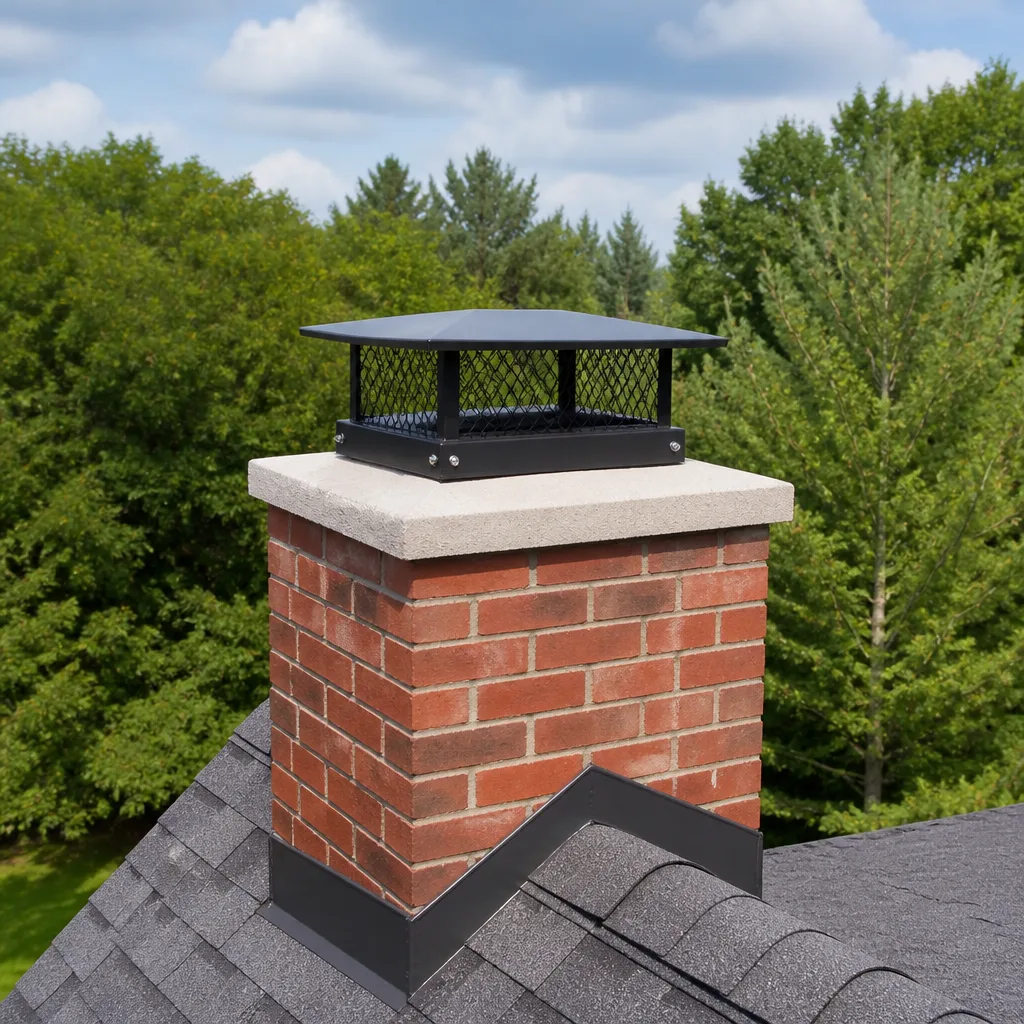 Sweep & inspection
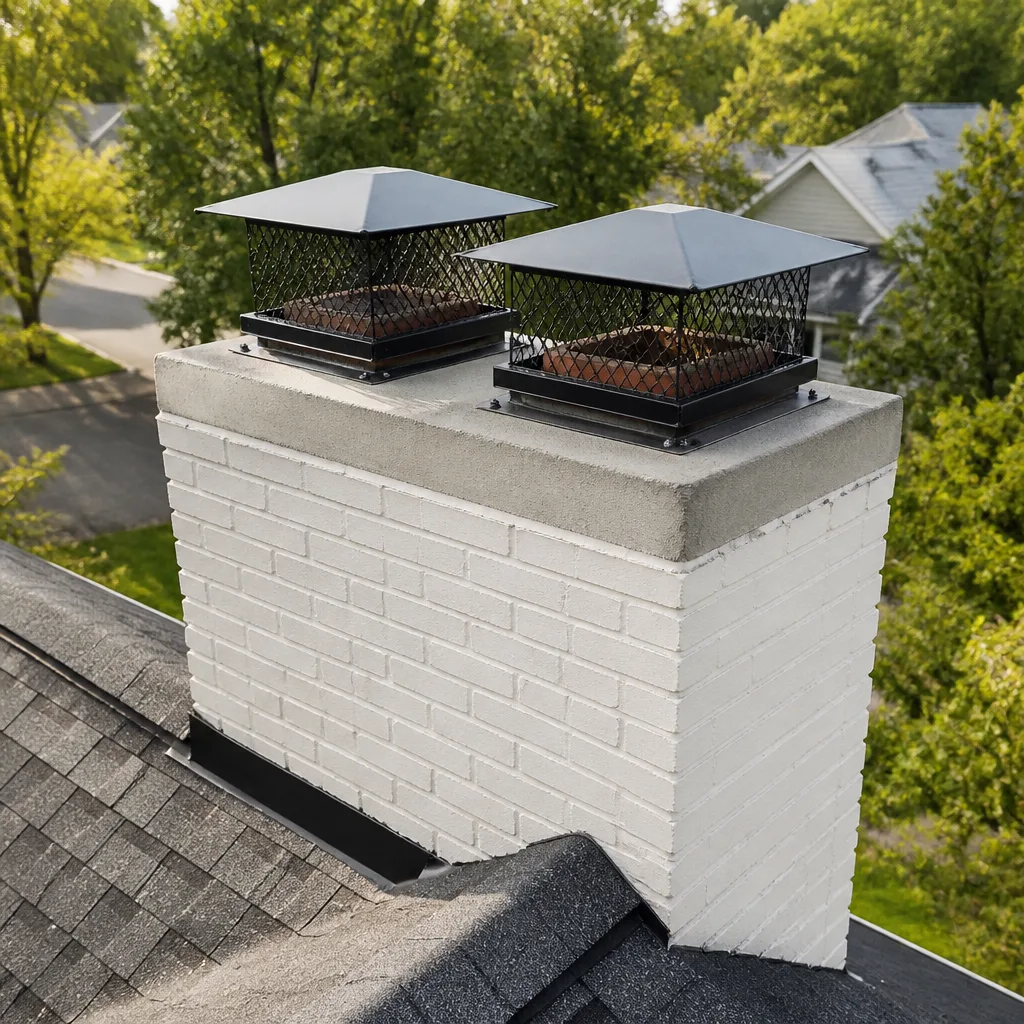 Caps & crowns
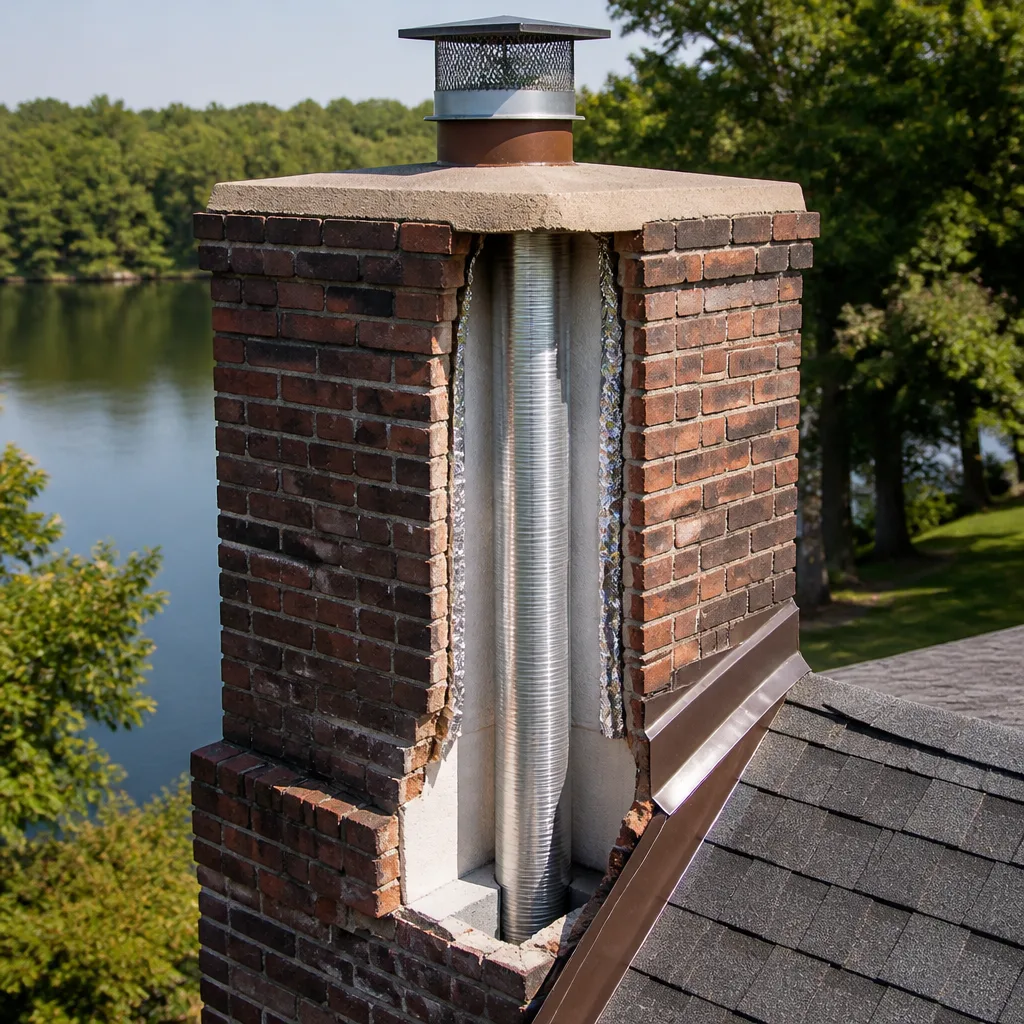 Flue relining
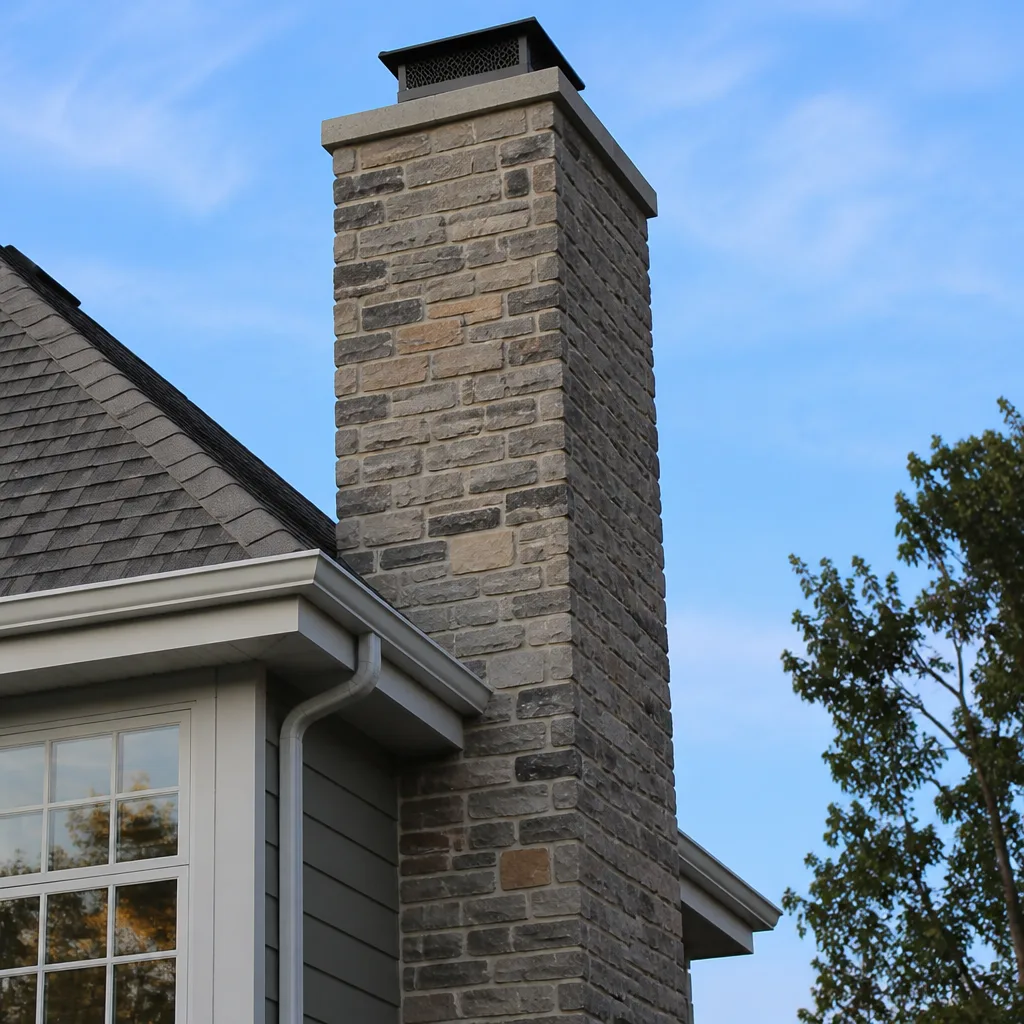 Masonry repair
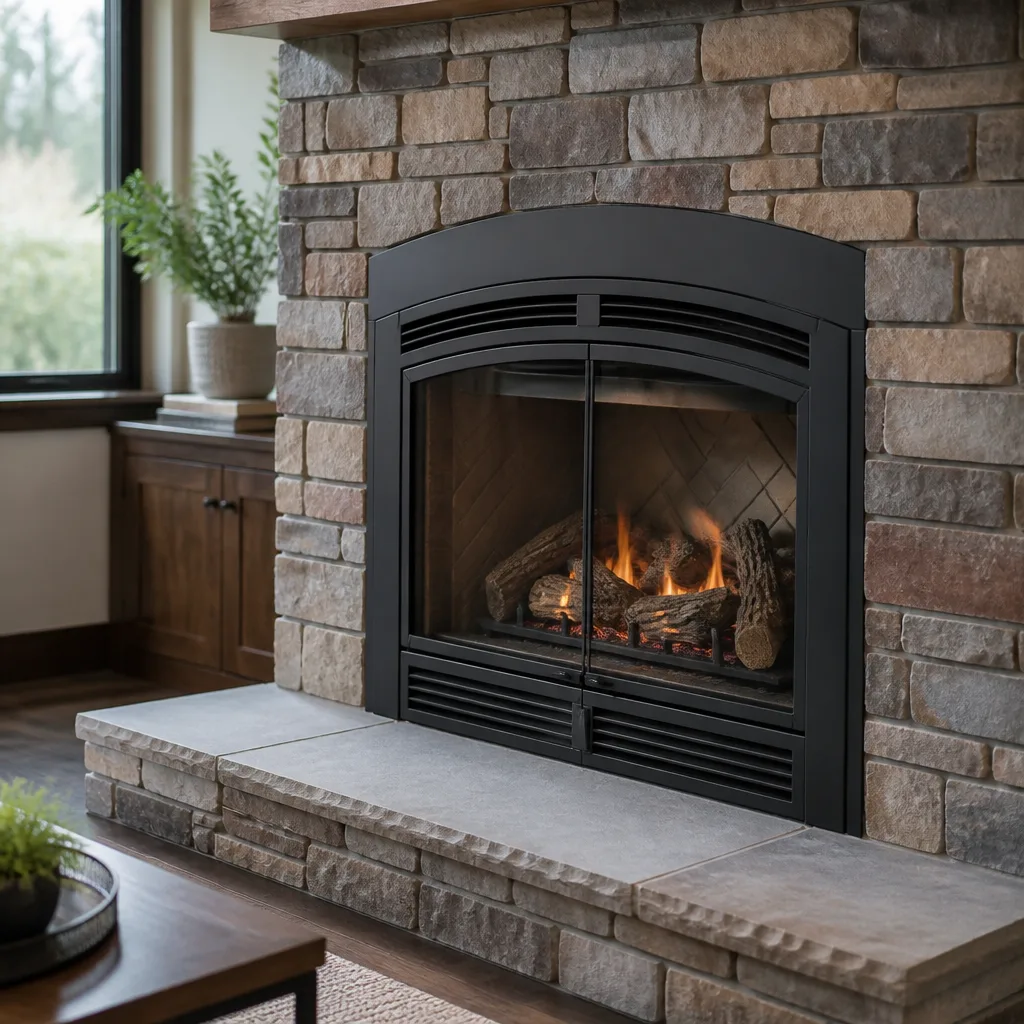 Gas fireplace service
Level 1 sweep and inspection to the NFPA 211 annual standard - flue, crown, cap, and flashing checked and photographed
Chimney sweep logs do not sweep chimneys. They loosen some creosote - which then falls where a brush and vacuum still have to collect it.
The Complete Guide to Chimney Cleaning in Lake Jeanette
Most chimney fires start behind a clean-looking flue. That’s the uncomfortable part of this trade. A sweep can run a brush down a chimney, knock the loose soot into a vacuum, and hand you a receipt that says “cleaned” – and the baked-on glaze that actually ignites can still be sitting right there on the liner wall. In Lake Jeanette, where piedmont humidity works on creosote between burns, that gap matters more than it does in drier parts of the country. This guide walks through what chimney cleaning in Lake Jeanette actually involves, how the local climate and housing stock change the job, and what a real post-sweep report should show you.
Quick Answer
Chimney cleaning in Lake Jeanette means removing creosote, soot, and obstructions from the flue and firebox, then inspecting the whole system – firebox, damper, flue, cap, and crown – so you know it’s safe to burn, not just tidy. Most homes in Lake Jeanette need a sweep once a year after a full heating season, and homes burning often or burning unseasoned wood need it more frequently because piedmont humidity hardens creosote faster. A camera inspection is part of the job, not an add-on; without it, nobody can tell you what’s actually on the flue walls.
Styles & brands we work with
- Sweep & inspection
- Caps & crowns
- Flue relining
- Masonry repair
- Gas fireplace service
Table of Contents
- Why Lake Jeanette Chimneys Age Differently
- Level 1, 2, and 3 Inspections: Which One You Need
- What a Proper Chimney Cleaning Actually Involves
- Rotary Systems vs. Standard Brushes: What Gets Left Behind
- Masonry Fireplaces vs. Prefab Inserts: Two Different Cleaning Jobs
- What a Post-Sweep Report Should Document
- How Often Should You Schedule a Sweep?
- Common Mistakes to Avoid
Why Lake Jeanette Chimneys Age Differently
Creosote doesn’t behave the same way everywhere. In a dry climate, the soot and tar left after a fire tends to stay crumbly and flaky for a while – easy to brush away on the next visit. Lake Jeanette sits in the North Carolina piedmont, where summer humidity runs high and shoulder seasons stay damp. That moisture gets into the flue between burns, and it changes the chemistry of what’s already coating the walls.
What happens is a progression. First-degree creosote is the light, flaky stuff. Second-degree is stickier and clings in ribbons. Third-degree creosote is glazed, hard, and essentially fused to the liner surface – and it’s the fuel that turns a small ignition into a chimney fire. In humid air, that progression happens faster. A Lake Jeanette homeowner who burns through a normal winter and then leaves the chimney alone until the following fall may come back to a flue that’s already glazed.
The humidity issue has a second edge. Moisture that condenses on the flue walls combines with the acidic byproducts of combustion, and over time that mix attacks mortar joints and terra cotta. So the same conditions that make creosote harder to remove also make the liner more vulnerable to damage underneath it. You can’t see either problem from the firebox looking up.
What this means for cleaning frequency in Lake Jeanette
- Homes that burn regularly through the winter should be swept after the season ends, not before the next one starts.
- Burning unseasoned or “green” wood accelerates both creosote buildup and moisture problems, because the wood itself is carrying water into the fire.
- Chimneys that sat unused for a season or more should get a camera inspection before the first fire, since dormant flues collect debris, nesting material, and moisture.
- Homes near the tree canopy common in Lake Jeanette see more leaf litter and animal activity at the cap, which is an obstruction risk independent of creosote.
The takeaway isn’t that Lake Jeanette chimneys are uniquely doomed. It’s that the local climate compresses the timeline, and a yearly sweep timed to the end of the burn season catches problems before they harden into something that needs a rotary system or a liner repair to fix.
Level 1, 2, and 3 Inspections: Which One You Need
The National Fire Protection Association publishes NFPA 211, the standard that defines three inspection levels for chimneys. Most homeowners have never heard of them, and that’s a problem, because which level you get determines what anyone can actually tell you about your chimney.
Level 1 inspection
A Level 1 inspection covers the readily accessible portions of the chimney – the firebox, damper, and as much of the flue as can be seen from the firebox and the top. It’s appropriate when the chimney is in known good condition and nothing has changed since the last service. It’s the minimum, and it’s what most “free sweep” offers quietly include.
Level 2 inspection
A Level 2 inspection adds a video camera scan of the entire flue interior. It’s required after any change in the system – a new appliance, a fuel change, a chimney fire, a property sale, or any event that could have damaged the liner. It’s also the right call for any Lake Jeanette home that’s changing hands, since a home inspection rarely covers the inside of the flue in any depth.
Level 3 inspection
Level 3 is a diagnostic inspection that may involve opening walls or removing parts of the chimney to access concealed areas. It’s warranted when a Level 2 reveals a problem that can’t be fully assessed without access – a suspected breach in a concealed section, for example.
Which level Lake Jeanette homes typically need
After a full heating season, most Lake Jeanette homeowners want a Level 2. You’ve just run the system hard for months under humid conditions that accelerate creosote hardening. A Level 1 sweep plus a brush and a nod doesn’t tell you whether the glaze has started, whether the terra cotta has spalled, or whether a joint has opened up. The camera does. We treat the camera inspection as part of the standard job for exactly that reason – it’s the only way to make a recommendation grounded in evidence you can see for yourself.
What a Proper Chimney Cleaning Actually Involves
A chimney sweep isn’t a brush on a pole. Here’s what a full cleaning looks like when it’s done to standard, in order:
- Set up protection. Drop cloths and a sealed work zone around the fireplace opening, so nothing in your home gets covered in soot. A vacuum running to negative pressure keeps dust from escaping into the room.
- Inspect before cleaning. The technician checks the firebox, damper, smoke chamber, and flue, and runs the camera before any cleaning starts. You need to know what you’re cleaning and what’s under it.
- Remove the creosote. Depending on what’s on the walls, this means a standard poly brush for light deposits or a rotary system for glazed and hard deposits. More on that difference below.
- Clean the firebox and smoke chamber. The smoke chamber above the damper is a common collection point for creosote and a frequent source of hidden buildup. It has to be addressed, not skipped.
- Clean the cap and check the crown. The cap and crown are where water gets in. If either is damaged or missing, the technician should tell you before the next rain does.
- Test the draft. After cleaning, a smoke test or draft check confirms the flue is venting correctly.
- Document the findings. Photos and a written report of what was found, what was cleaned, and what needs attention. We’ll cover what belongs in that report further down.
Where the process usually diverges
Steps 2, 4, 6, and 7 are the ones that get skipped. A sweep that goes straight to the brush, cleans the flue, and stops misses the smoke chamber, doesn’t test the draft, and has no documentation. That’s a cleaning, but it’s not a safety assessment. In our experience, the most common reason a homeowner calls us after a recent sweep is that the previous visit produced no photos and no written findings – just a verbal “you’re good to go.”
Proper chimney care prevents the two things no homeowner wants: a chimney fire and a carbon monoxide problem. The cleaning removes the fuel for the first. The inspection – camera, draft test, cap and crown check – is what catches the second before it becomes a household emergency.
Rotary Systems vs. Standard Brushes: What Gets Left Behind
Standard brush sets are fine for light, flaky creosote. They are not fine for glazed third-degree deposits, and they don’t do much on terra cotta that’s already pitted or on stainless liner surfaces that hold a film. This is the gap that most “we cleaned it, you’re fine” outcomes fall into.
What standard brushes miss
A poly brush is designed to knock loose what’s ready to come off. On a glazed flue, the brush passes over the glaze the way a broom passes over dried paint. It looks cleaner because the loose soot is gone and the flue color looks more uniform. The hard, combustible layer is still there.
What rotary cleaning removes
Rotary systems use mechanical rotation with a specific head for the job – a whip head for softer deposits, a chain head for harder creosote, sized to the flue. The rotation breaks up the glaze rather than sliding past it, and because the head is sized to the flue, it reaches the full circumference rather than just the accessible curve.
- Terra cotta liners: rotary cleaning cuts through glazed creosote that a brush skates over, and the whip head doesn’t chip spalled clay the way an aggressive chain head can.
- Stainless liners: rotary cleaning removes the film that builds on stainless surfaces and can’t be brushed out, and it’s done with a head sized to the liner’s interior diameter so the seam isn’t stressed.
- Smoke chambers: rotary tools reach into the smoke chamber, which is where creosote packs hardest and which standard brushes cannot access.
If a chimney has third-degree creosote, rotary cleaning is the path to actually removing it. In some cases, if the glaze has penetrated and damaged the liner, cleaning reveals the liner is a candidate for replacement – which is where a DuraFlex liner system comes in. The point of a proper rotary clean is that it either confirms the liner is sound or surfaces that it isn’t, and you know which one before the next heating season.
Masonry Fireplaces vs. Prefab Inserts: Two Different Cleaning Jobs
Lake Jeanette has a mix of housing that makes a difference to how the cleaning is done. The older masonry fireplaces and the newer prefab fireplaces with inserts are not the same job, they don’t take the same equipment, and they don’t have the same failure points.
Older masonry fireplaces
Masonry chimneys in Lake Jeanette homes typically have terra cotta liners, mortar joints, and a crown at the top. The cleaning concerns are glazed creosote on terra cotta, mortar joint deterioration from moisture and acids, spalling clay, and cracks in the crown that let water in from above. The inspection should look at all four. If the smoke chamber masonry is deteriorating, that’s a firebox restoration question – the kind of repair a HeatShield application addresses, and a scope most sweep-only companies can’t handle.
Prefab fireplaces with inserts
Prefab and insert systems have their own constraints. The flue diameter is smaller, the manufacturers specify particular cleaning methods, and the liner material – often stainless – has different wear points. A brush sized for a masonry chimney is too aggressive or too loose for a prefab flue, and the wrong tool can damage the liner. The insert itself usually needs to be pulled to clean the smoke shelf and the full flue properly. That’s a different process, and it’s a step a general handyman sweep typically won’t do.
How the approach changes
- Tool sizing: the rotary head and brush set are matched to the flue diameter and material, not a one-size-fits-all pass.
- Insert removal: prefab inserts are pulled for a full cleaning and reinstalled with the gasket checked.
- Smoke chamber access: masonry smoke chambers are cleaned directly with rotary tools; prefab systems are cleaned according to the manufacturer’s spec.
- Repair scope: older masonry often reveals firebox or crown work that needs a contractor-grade material – Olympia Chimney or Copperfield components for liner or cap work, HeatShield for firebox resurfacing – while a prefab insert is usually a liner or a gasket question.
The one thing both have in common is that the cap and crown at the top are the most common water-intrusion points. If the cap is missing or the crown is cracked, water gets in and the interior damage starts at the top and works down. Cap and crown work is part of the full-system service we provide, and it’s worth doing at the same time as a sweep rather than waiting for the damage to show up inside.
What a Post-Sweep Report Should Document
A verbal “you’re good to go” is not a result. It’s the absence of information. Here’s what a report should contain, so you have a record of the condition of the chimney and a clear basis for any recommendation:
- Before-and-after photos of the flue interior. From the camera scan, showing what was on the walls and what the walls look like after cleaning. You should be able to see the difference.
- The creosote degree observed. First, second, or third degree, and in what parts of the flue. This drives the cleaning method and the next interval.
- The inspection level performed. Level 1, 2, or 3, and what was covered.
- Condition of the liner. Any cracking, spalling, joint separation, or liner damage, with the photo that shows it.
- Condition of the firebox and smoke chamber. Including any deterioration that needs repair.
- Condition of the cap and crown. Present, damaged, or missing, and whether water intrusion is a current risk.
- Draft test result. Pass, or the finding if it doesn’t.
- Recommendations with clear priorities. What needs doing now, what can safely wait, and what’s a “keep an eye on it” item.
This is the part most homeowners have no way to verify, and the reason they hesitate when told they need significant liner or masonry work. The answer is the report. Nothing should be recommended that isn’t backed by a photo you can look at yourself. We treat that as the standard: if the report shows the problem, you can decide on the repair. If it doesn’t show a problem, nothing needs doing – and we’ll say so.
How Often Should You Schedule a Sweep?
Once a year is the default recommendation for a chimney in regular use, and it’s what most standards bodies suggest as a minimum. In Lake Jeanette specifically, we lean toward sweeping at the end of the burn season rather than the start of the next one. Here’s why: the creosote and moisture are already in the flue, so cleaning them out before the humid summer gives the liner a dry season to stabilize. If you wait until fall, the glaze has had a whole damp summer to harden, and the cleaning is harder on the liner.
Faster intervals
- Frequent burning: a household that burns several cords through the winter will typically build creosote faster and should be inspected at least once a year, sometimes more.
- Unseasoned wood: green or damp wood generates more creosote and more moisture. Change the fuel or shorten the interval.
- Unused chimneys: a chimney that’s sat dormant needs a sweep and inspection before the first fire, not just after. Debris, nests, and moisture collect in an unused flue.
- After any creosote-heavy season: if you ran the fire hot and long without a routine sweep, get an inspection camera on the flue before doing it again.
One more factor in Lake Jeanette: tree canopy. Leaf litter, squirrel and bird nests, and the occasional fallen twig all end up at the cap. That’s an obstruction problem separate from creosote, and it can happen in a single season. A sweep with a camera catches it; a visual check from the ground does not.
Common Mistakes to Avoid
- Skipping the camera inspection to save time. Two sweeps can look identical from the firebox and be completely different inside the flue. Without a camera, no one knows whether the glaze has started, and you’re paying for a cleaning without the safety assessment that makes it useful.
- Assuming a “clean” flue is a safe flue. Soot color and cleanliness at the top of the flue tell you nothing about glazed creosote on the walls, a cracked terra cotta liner, or a deteriorating smoke chamber. Those need the camera and the report.
- Treating a verbal “you’re good to go” as the result. In Lake Jeanette, where creosote hardens fast, a written report with photos is your record. If a sweep can’t produce one, ask why.
- Using a general handyman for a chimney cleaning. A chimney is a system with a firebox, a smoke chamber, a flue, and a cap. A general handyman with a brush may clean the flue and miss the rest of it, then leave you with the same creosote problem next season.
- Skipping the cap and crown check. The cap and crown are where most water gets in. A missing cap or a cracked crown lets rain and humidity into the flue and starts the damage at the top, which is the hardest part to reach. Checking them during the sweep is the low-cost fix.
- Burning unseasoned wood and then stretching the interval. Damp wood adds moisture to the flue and speeds creosote hardening. In the piedmont climate, that combination is what pushes a flue from second-degree to glazed third-degree creosote in a single season.
- Ignoring a dormant chimney. A chimney that hasn’t been used in a year or more collects debris, nests, and moisture. Inspect it before the first fire, not after – you don’t want the first burn of the season to be the test.
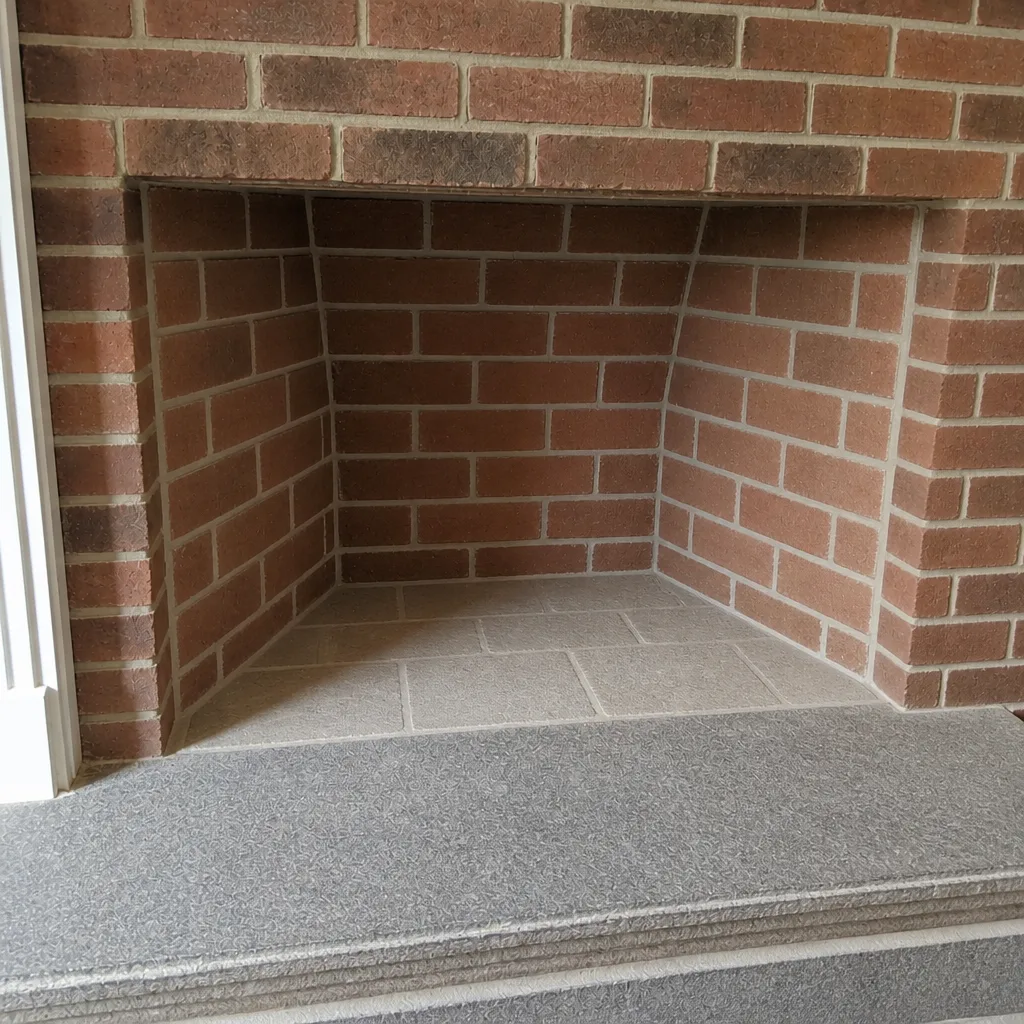
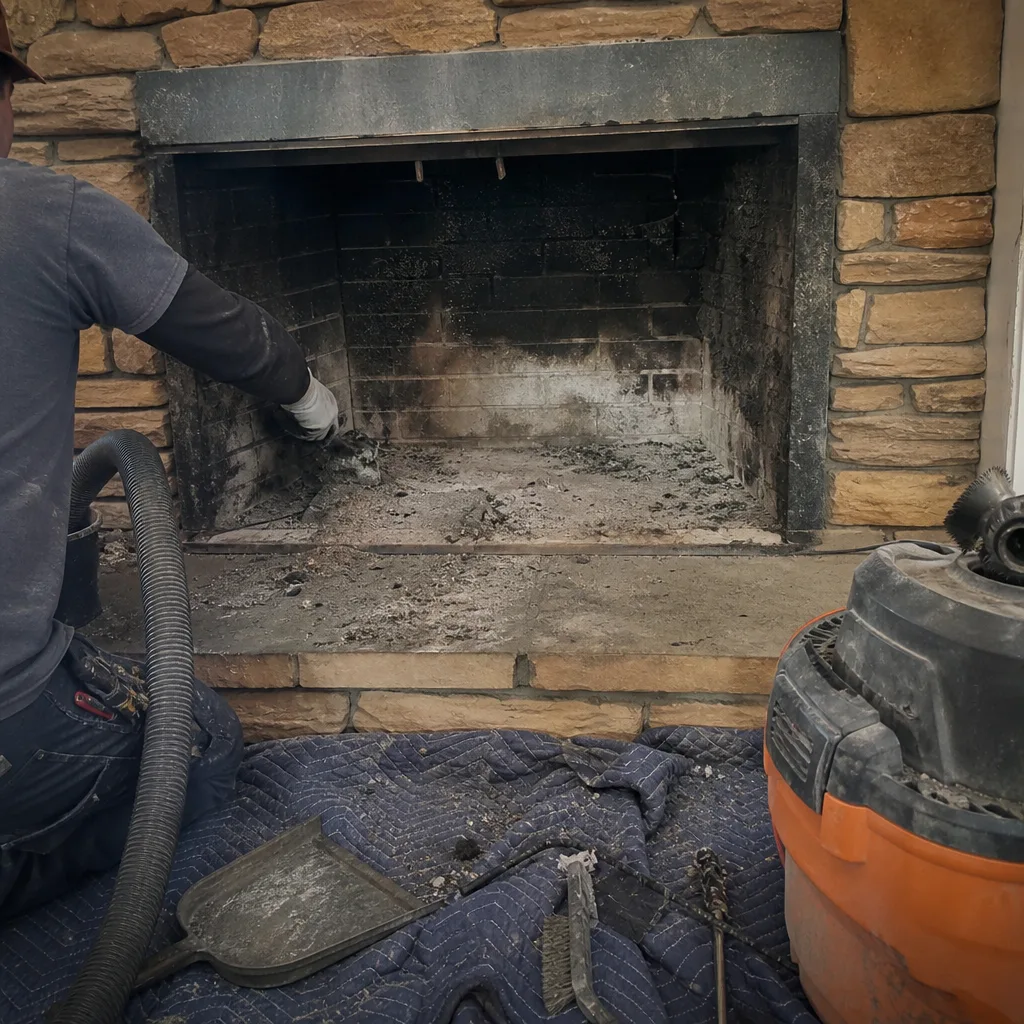
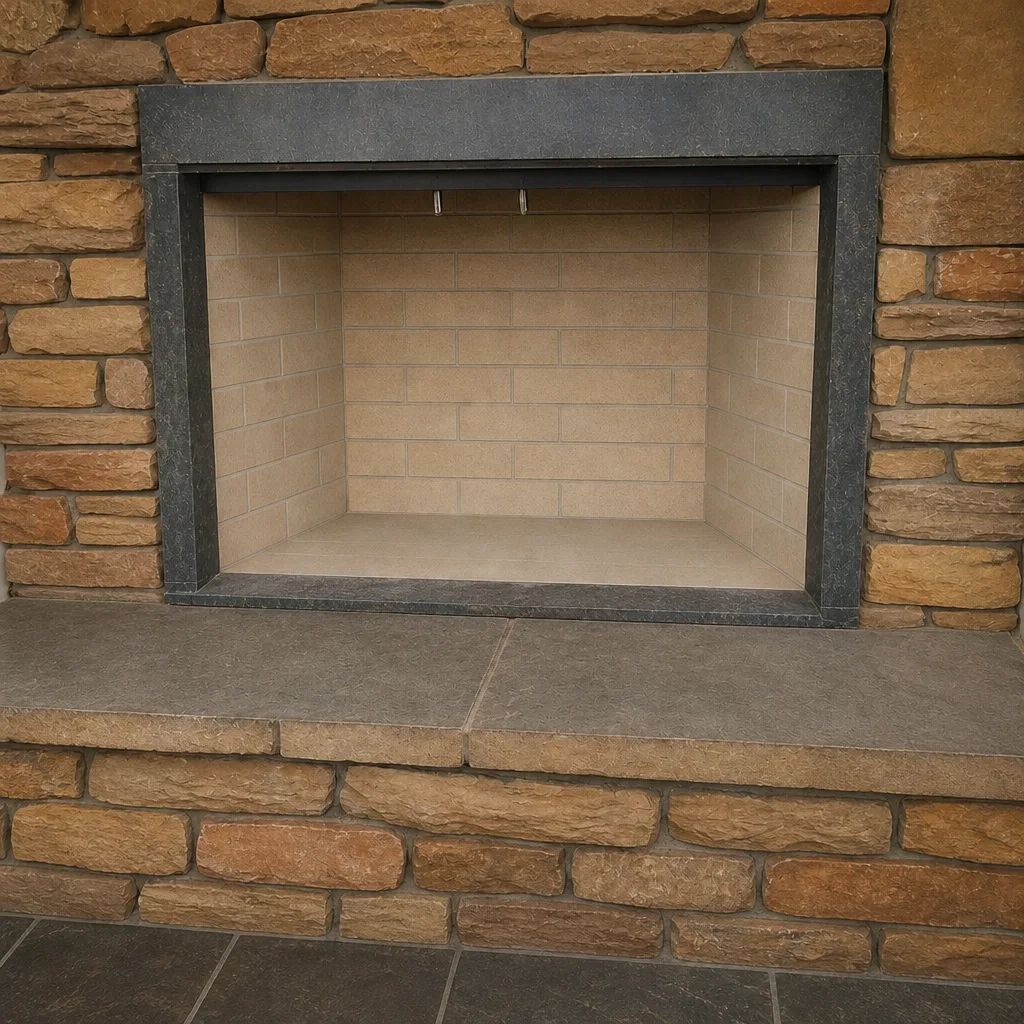
See the difference
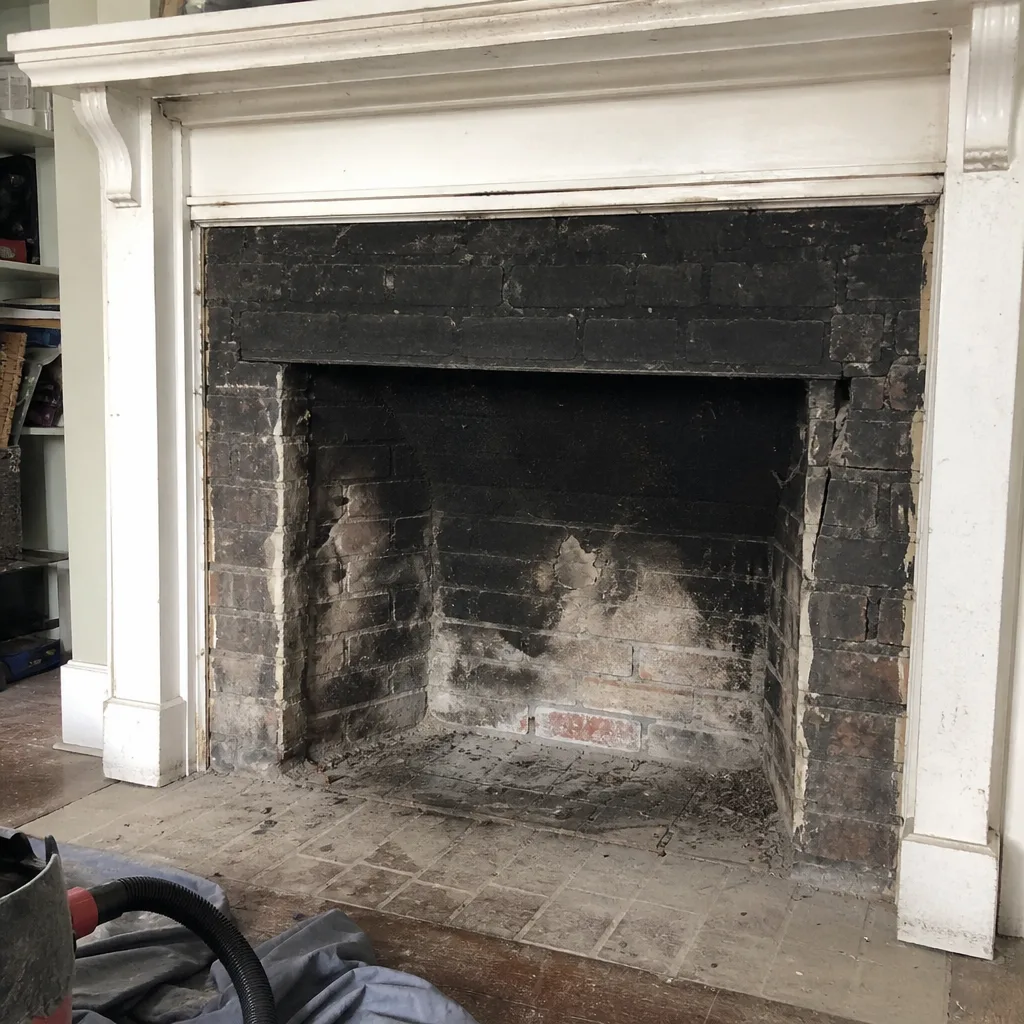 Before
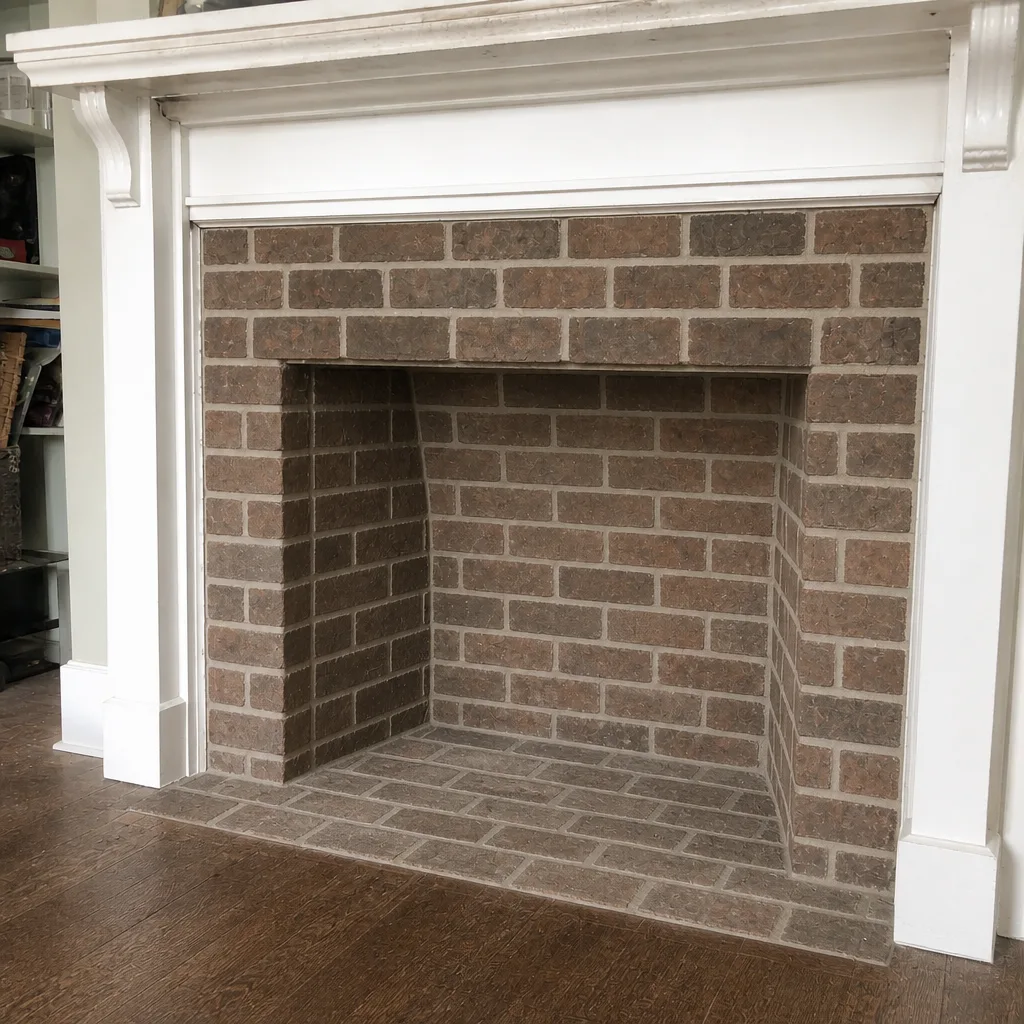 After
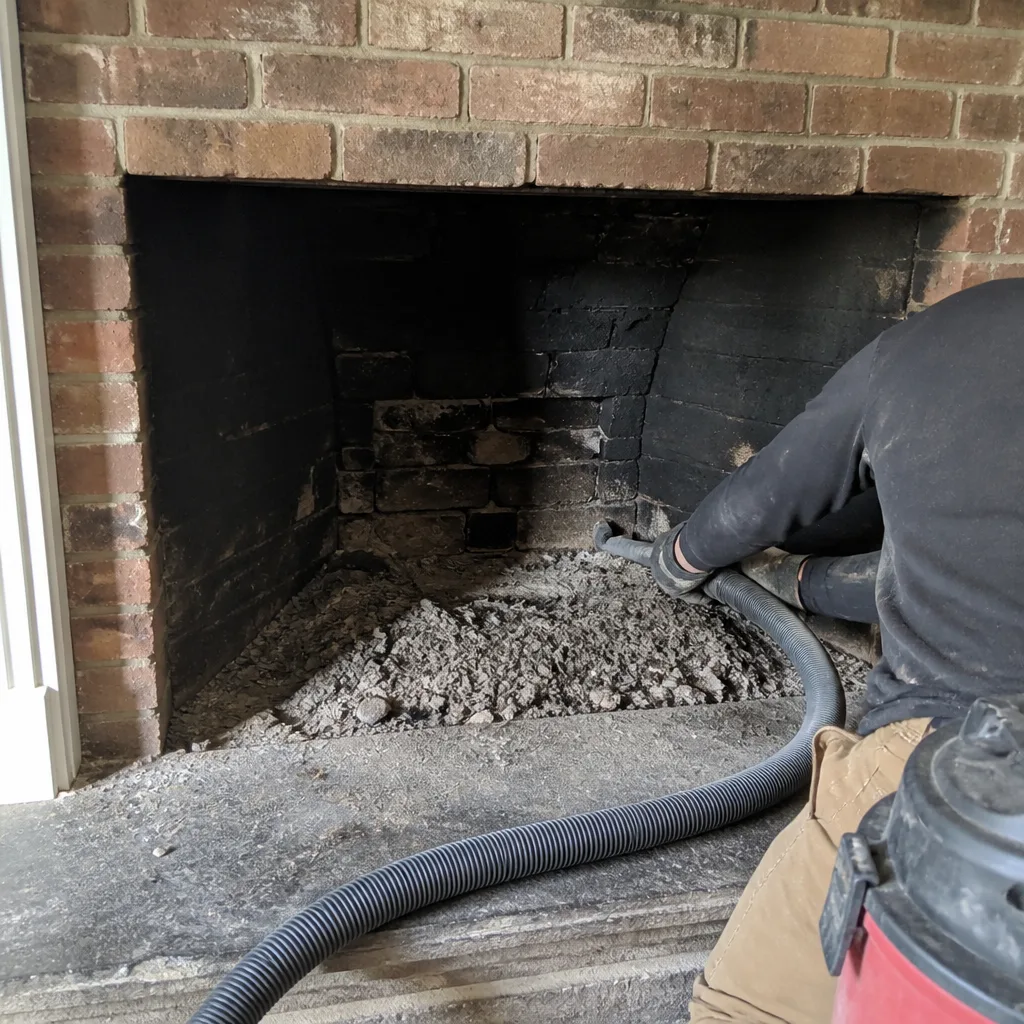 Before
 After
 Before
 After
When to Call a Professional
Some chimney work is genuinely not a homeowner job. High-tension components in certain system types, concealed structural issues, liner replacement, and firebox restoration all fall into the category of work a trained professional should do, because the failure mode isn’t inconvenience – it’s a fire or a carbon monoxide problem. The cases where you should call rather than investigate yourself: a newly purchased home with a fireplace you’ve never used, a chimney that’s sat unused for a season or more, a previous sweep that produced no report or photos, visible cracking or spalling in the firebox, a missing or damaged cap, or any odor of creosote in the house when the fireplace isn’t burning.
Chimney Sweep Lake Jeanette offers free estimates in Lake Jeanette – call (877) 492-3599. We answer 24/7. Fast dispatch from 7am to 7pm, Sunday through Friday.
Frequently Asked Questions
Most chimney cleanings in Lake Jeanette fall in a typical range based on the flue size, the level of creosote buildup, and whether the job needs a rotary system – the written estimate sets the final price, and the estimate is free. A standard sweep on a light-creosote flue is at the low end; a glazed third-degree flue that needs rotary cleaning and a full camera inspection is higher. Call (877) 492-3599 for an exact quote – estimates are free.
Once a year for a chimney in regular use, and at the end of the burn season rather than the start of the next one, because piedmont humidity hardens creosote through the summer. If you burn often or burn unseasoned wood, shorten the interval to match the buildup. Call (877) 492-3599 to book a sweep and camera inspection.
Only if the camera inspection shows the existing liner is failed – cracking, spalling, joint separation, or glazed damage that rotary cleaning can’t remove. A DuraFlex liner system is the fix when the liner is genuinely gone, but it’s not the answer to a flue that just needs a rotary clean. Nothing should be recommended without a photo of the problem you can see for yourself, and we’ll tell you plainly when a liner repair can wait. Call (877) 492-3599 for an inspection – estimates are free.
Creosote accumulates, and glazed third-degree deposits can ignite. A chimney fire can damage the liner and the structure, and a breached liner is a carbon monoxide path into the home. Skipping the sweep also means no one has checked the cap, the crown, or the liner for damage, so a water-intrusion or liner problem can go unnoticed until it’s a larger repair. Call (877) 492-3599 to get the chimney on a yearly schedule.
A Level 1 inspection covers the readily accessible parts of the chimney from the firebox and the top. A Level 2 inspection adds a video camera scan of the full flue interior and is the right level after a heating season, after a property sale, or after any event that could have damaged the liner. Most Lake Jeanette homes should get a Level 2 after a full winter of burning. Call (877) 492-3599 to schedule one.
No. Masonry fireplaces with terra cotta liners and prefab inserts with stainless liners have different flue diameters, different wear points, and different manufacturer specs for cleaning. A prefab insert typically has to be pulled to clean the smoke shelf and the full flue properly, and the wrong brush or rotary head can damage the liner. We match the tooling to the system. Call (877) 492-3599 for a free estimate.
The Bottom Line
Chimney cleaning in Lake Jeanette is a yearly job timed to the end of the burn season, done with a camera inspection and a report that shows what was found. The local piedmont humidity changes the timeline – creosote hardens faster, so the sweep needs to happen before it glazes. The housing mix matters too: older masonry fireplaces need rotary cleaning, smoke chamber work, and a cap and crown check, while prefab inserts need the insert pulled and the liner cleaned to spec. The one thing they share is that a verbal “you’re good to go” is not enough. Lay out the photos, the creosote degree, the liner condition, and the priorities, and let the homeowner decide with real information. Call (877) 492-3599 for a free estimate. We answer 24/7. Fast dispatch from 7am to 7pm, Sunday through Friday.
Written by the team at Chimney Sweep Lake Jeanette.